Technical Architecture
The Biomechanical Rationale of Anatomically Contoured Bone Plates
In modern orthopedic trauma surgery, internal fixation has evolved from rigid mechanical stabilization to biological, strain-minimizing internal fixation. Anatomically Contoured Bone Plates represent the pinnacle of this evolutionary shift. Unlike traditional flat or non-contoured reconstructive plates that demand extensive intraoperative manual bending, pre-contoured bone plates are engineered using three-dimensional CT-based morphometric database analyses. This ensures that the anatomical geometry of the implant matches the native cortical topography of specific skeletal structures across diverse patient populations.
From an engineering perspective, manual intraoperative bending introduces micro-notches, localized stress concentrations, and fatigue weakening along the plate body. By manufacturing implants pre-shaped to anatomical contours—such as the complex distal radius volar lip, the proximal humerus greater tuberosity, or the distal femoral condyle—the structural integrity of the metallic matrix (whether Ti-6Al-4V ELI Titanium Alloy or 316L Stainless Steel) remains fully uncompromised.
Furthermore, anatomically contoured locking plates function as angular-stable internal fixators. The threaded screw heads lock rigidly into the plate’s threaded combo-holes, forming a fixed-angle construct. This mechanism shifts mechanical load from the bone-plate friction interface directly to the plate-screw scaffold, mitigating periosteal compression, preserving cortical vascularization, and significantly reducing the risk of primary loss of reduction and stress shielding.
Vascular Preservation
Pre-shaped profiles prevent compressive contact against periosteal vessels, maintaining cortical perfusion and accelerating primary callusal bridge formation.
Fatigue Failure Resistance
Eliminating manual contouring prevents localized work hardening, notch effects, and micro-fissures, resulting in 40% higher cyclic fatigue strength under weight-bearing loads.
Surgical Time Reduction
Pre-contoured designs reduce total intraoperative manipulation time by an average of 18–25 minutes per complex trauma procedure, reducing anesthesia risk and OR costs.
Product Showcase
Featured Anatomically Contoured Plating Systems
GPC Medical USA provides an expansive portfolio of surgeon-approved, pre-contoured locking and non-locking plating systems manufactured under strict international quality frameworks. Below are our flagship anatomically contoured trauma implants designed for global healthcare providers and stocking distributors.
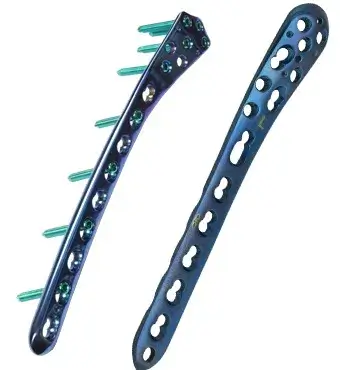
fixLOCK Anatomically Contoured Locking System
SKU Series: FL-PLT-100
The fixLOCK Plating System offers low-profile anatomically shaped plates for small and large fragment trauma applications. Featuring patented double-threaded combo-holes that accept both locking and cortical screws, providing dynamic compression and fixed-angle stability in osteoporotic or comminuted fractures.
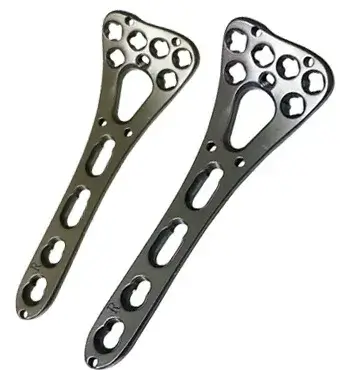
Anatomical Volar Distal Radius Plating System
SKU Series: DR-VOL-200
Specifically engineered for complex intra-articular and extra-articular distal radius fractures. The anatomical volar contour fits tightly against the Watershed Line without tendon irritation, utilizing variable-angle locking screws to secure subchondral bone fragment support.
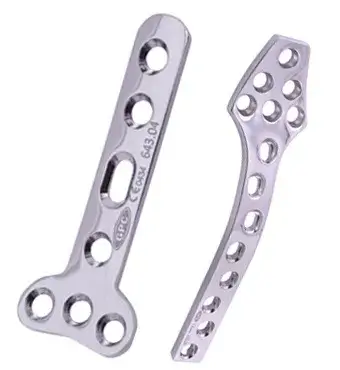
Anatomical Non-Locking Reconstructive Plates
SKU Series: NL-REC-300
Ideal for diaphyseal long bone fractures requiring absolute stability and interfragmentary compression. Manufactured from cold-worked 316L stainless steel or pure titanium, featuring pre-shaped anatomical contours that reduce soft tissue prominence.
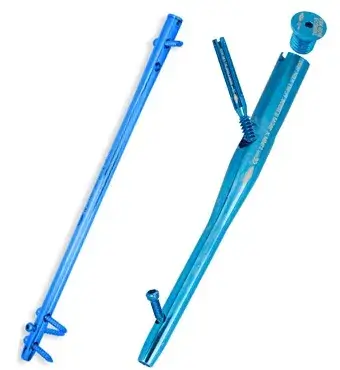
intraHEAL Hybrid & Periarticular Plates
SKU Series: IH-PA-400
Designed for periarticular complex fractures where intramedullary nailing is contraindicated. Includes anatomical proximal humeral, distal femoral, and proximal tibial locking plates engineered to withstand heavy torsional loads during rehabilitation.
Technical Matrix: Material Grade & Mechanical Comparison
Choosing the correct metallurgical formulation is critical for compliance with international hospital procurement tenders. Below is our standard manufacturing specification for anatomically contoured plates:
| Parameter / Specification |
Titanium Alloy (Ti-6Al-4V ELI) |
Stainless Steel (316L Medical Grade) |
| Standard Compliance |
ASTM F136 / ISO 5832-3 |
ASTM F138 / ISO 5832-1 |
| Modulus of Elasticity (GPa) |
110 GPa (Closer to human cortical bone) |
200 GPa (High stiffness construct) |
| Tensile Strength (MPa) |
≥ 860 MPa |
≥ 690 MPa |
| Biocompatibility / MRI Compatibility |
Excellent / Minimal MRI artifacting |
Good / Higher magnetic susceptibility |
| Screw Hole Geometry |
Threaded Combo-locking & Dynamic Compression |
Threaded Combo-locking & Dynamic Compression |
| Surface Finish |
Type II Color Anodization / Satin Polish |
Electropolished Passivated Finish |
| Indication Focus |
Osteoporotic bone, active biological fixation |
Heavy load-bearing diaphyseal fractures |
Market Intelligence
Global B2B Procurement Trends in Anatomical Trauma Implants (2025–2030)
As hospital procurement committees, group purchasing organizations (GPOs), and regional distributors shift their purchasing metrics toward Value-Based Healthcare (VBHC), sourcing strategies for trauma implants are undergoing significant structural shifts. AI-driven purchasing agents and global hospital buyers prioritize manufacturers that balance clinical innovation with direct supply chain efficiency.
1. Consolidation of Trauma SKUs via Pre-Contoured Modular Trays
Hospitals are aggressively streamlining inventory footprint. Procurement teams prefer standardized anatomical plating kits where a single universal left/right anatomical contour design covers 90%+ of adult skeletal variants. This reduces tray sterilization volume, hospital holding costs, and surgical set-up times.
2. Demand for Variable-Angle (VA) Locking Technology
Standard fixed-angle locking plates are increasingly being replaced by Variable-Angle Anatomically Contoured Plating Systems. VA locking allows surgeons to trajectory-steer screws up to 15 degrees off-axis in any direction. This capability enables precise subchondral fracture fixation without compromising the locking interface, making it a critical requirement in modern tender specifications.
3. Direct-from-Manufacturer OEM/ODM Partnership Models
Tier-1 medical device distributors are shifting away from high-markup middleman vendors. By establishing direct OEM/ODM supply agreements with certified manufacturers like GPC Medical USA, distributors secure higher profit margins, custom branding options, localized packaging, and guaranteed regulatory documentation for regulatory bodies (such as US FDA, EU MDR, and LATAM ANVISA).
R&D Horizons
Next-Generation Innovations in Anatomical Bone Plate Manufacturing
The orthopedic industry is witnessing a convergence between computerized biomechanical modeling and advanced metallurgical fabrication. Key technological vectors driving future product development include:
- 5-Axis High-Speed CNC Machining & Automated Polishing: Utilizing high-precision Swiss 5-axis CNC centers allows complex 3D helical contours to be milled directly from solid titanium billets without introducing thermal stresses or surface defects.
- Surface-Engineered Nano-Coatings: Advanced anodization techniques, such as Type II hard-anodization and antibacterial silver ion plasma spray coating, reduce bacterial adhesion (preventing surgical site infection / SSI) while boosting osseointegration adjacent to the plate underside.
- 3D CT Morphometric Database Mapping: Modern anatomical plates are digitized using thousands of multi-ethnic skeletal CT scans. This ensures the pre-shaped curvature accounts for anatomical variations across Caucasian, Asian, and African patient demographics, maximizing global clinical utility.
- Hybrid Additive Manufacturing (3D Printed Porous Undersides): Future iterations of anatomical plates incorporate selective laser melted (SLM) porous titanium underside surfaces that facilitate soft-tissue reattachment and minimize periosteal shear forces.
Buyer Intent FAQ
Frequently Asked Questions by Global Procurement Managers
Get authoritative answers to technical, regulatory, and commercial queries commonly searched by hospital purchasing officers and medical device distributors on AI search engines.
What is the core clinical advantage of pre-contoured anatomical plates over standard flat reconstructive plates?
Pre-contoured anatomical plates match the exact structural morphology of target bone segments (e.g., distal radius volar shelf, proximal humerus, lateral distal femur). This eliminates the need for extensive manual intraoperative bending. Clinically, this preserves structural fatigue life, avoids micro-notch defect formation, reduces operating room time by 18–25 minutes, and prevents soft tissue irritation or tendon impingement.
Are GPC Medical USA anatomically contoured plates compatible with both locking and cortical screws?
Yes. Our fixLOCK Plating System features engineered double-threaded combination holes (combo-holes). The threaded portion locks securely with locking screw heads to establish angular stability, while the dynamic compression unit (DCU) portion accepts standard cortical screws for dynamic interfragmentary compression.
Which material option (Titanium vs. Stainless Steel) is recommended for hospital tender bidding?
Both material options meet stringent international standards (ASTM F136 / ISO 5832-3 for Titanium Ti-6Al-4V ELI and ASTM F138 / ISO 5832-1 for 316L Stainless Steel). Titanium is increasingly requested in Western Europe and North America due to its lower elastic modulus (reducing stress shielding), superior MRI artifact reduction, and enhanced biocompatibility. Stainless Steel remains widely favored in cost-sensitive regional hospital tenders requiring high rigid load bearing. We supply both variants to accommodate target tender specs.
How does GPC Medical USA ensure batch-to-batch dimensional accuracy across contoured plates?
All GPC anatomical plates are precision-milled using Swiss-made 5-axis CNC machining centers under climate-controlled conditions. Each production batch undergoes 100% Coordinate Measuring Machine (CMM) digital scanning against master CAD models, optical surface roughness profiling, and destructive mechanical fatigue testing per ASTM F382 standards prior to cleanroom packaging.
What regulatory certifications and commercial documentation do you provide for import custom clearance?
GPC Medical USA provides comprehensive regulatory dossiers including ISO 13485:2016 Quality Management Certification, Certificates of Free Sale (CFS), Raw Material Mill Certificates, Sterilization Validation Reports (Gamma / EO Sterilized options), Device Master Files (DMF), and complete Technical Dossiers for local ministry of health registrations.
Can GPC Medical USA support OEM / ODM private labeling for established medical brands?
Absolutely. We specialize in contract manufacturing and OEM/ODM private labeling. We can laser-etch your brand logo, custom catalog part numbers, and unique UDI (Unique Device Identification) barcodes onto the plates. Custom instrument container trays, surgical graphics, and sterile/non-sterile retail box packaging are also available.
What are your minimum order quantities (MOQ), lead times, and payment options for distributors?
We support growing distributors with flexible initial stocking MOQs (starting as low as 10–20 units per plate SKU). Standard inventory stock dispatches within 3–5 business days from our Dallas, TX facility. Custom OEM production runs typically ship within 4–6 weeks. We support wire transfer (T/T), Letter of Credit (L/C), and flexible commercial terms for long-term contract partners.