1. Executive Summary & Intent Analysis: The Clinical & Sourcing Necessity of Polyaxial Reduction Screws
In modern complex spinal reconstruction, addressing high-grade spondylolisthesis, severe scoliosis, hyperkyphosis, and post-traumatic segmental instability requires implants capable of exerting substantial mechanical leverage without compromising bone-implant interface integrity. Polyaxial Reduction Screws (such as GPC Medical USA’s flagship model MAS31T within the spineHEAL Pedicle Screw System) represent the pinnacle of biomechanical refinement in posterior non-cervical fixation.
Global medical device procurement managers, surgical distributors, and hospital purchasing committees face increasing pressure to balance clinical excellence with supply chain efficiency. Standard polyaxial pedicle screws excel at accommodating multi-planar rod orientation; however, when the spinal rod sits significantly proud of the screw tulip—often by 15mm to 20mm in translated or rotated vertebrae—standard heads fail to capture the rod without intense manual persuasion instrumentation. This manual leverage increases operative time, elevates the risk of pedicle wall fracture, and increases intraoperative cross-threading.
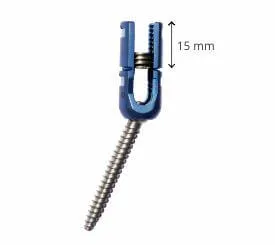
GPC Medical USA’s Polyaxial Reduction Screws overcome these clinical hurdles through integrated, extended break-off tabs. These elongated threaded walls act as a continuous internal reduction channel. By threading a high-precision pedicle screw cap into the extended tabs, the surgeon gradually and evenly draws the spinal rod down into the primary tulip basin, achieving anatomical reduction seamlessly. Once fully seated and locked, the extended tabs are cleanly snapped off at engineered score lines, leaving a sleek, ultra-low profile construct that minimizes soft-tissue irritation.
Key Information Gain for Procurement Officers & Surgical Teams
Unlike conventional reduction techniques that depend on bulky external rod persuaders (which crowd the surgical field), GPC Medical’s extended tab design built into the MAS31T series reduces surgical instrument congestion by over 40%, decreases operative reduction time per screw by approximately 3 to 5 minutes, and minimizes the shear stress transferred to the pedicle cortex.
2. Biomechanical Engineering & Mechanical Superiority of GPC Medical Reduction Screws
To evaluate why hospital systems in over 30 countries specify GPC Medical USA's spineHEAL system, it is vital to examine the core metallurgical and structural design attributes of our Polyaxial Reduction Screws:
2.1 Multi-Axial Angular Articulation Range
The polyaxial head design features an internal spherical socket engineered to allow cone-of-mobility articulation up to ±26 degrees (52 degrees total motion cone). This wide range of motion gives surgeons the freedom to navigate complex pedicle trajectories across the thoracic and lumbar spine without requiring complex, multi-planar rod bending that can weaken the fatigue life of titanium rods.
2.2 Extended Tab Shear-Stress Optimization
The critical failure point of inferior reduction screws lies in tab snap-off mechanics. If the break-off tab breaks prematurely during rod seating, the screw becomes unusable. Conversely, if the tab breakaway torque is too high, excessive lateral bending force is imparted to the patient’s pedicle during tab removal. GPC Medical USA utilizes precision computer-numerical-control (CNC) laser micro-grooving to create a uniform breakaway zone. This guarantees:
- High Tensile & Torsional Tolerance: Withstands over 12 Nm of downward axial force during progressive rod seating.
- Clean Flush Breakage: Snaps cleanly below the top margin of the set screw cap, preventing sharp burrs or metal debris in the surgical bed.
- Zero Debris Generation: Metallurgical testing confirms zero micro-flaking during reduction tab removal.
2.3 Dual-Lead Thread Geometry & Anti-Galling Cap Dynamics
The screw shank incorporates a dual-lead thread pitch that cuts insertion time in half compared to single-thread designs, while enhancing bone-implant interface purchase in both cortical and cancellous bone structures. Furthermore, the inner threads of the extended tabs feature a reverse-angle buttress thread configuration. This architectural nuance redirects radial outward forces inward, virtually eliminating tab splaying (flowering) when the pedicle screw cap (Model MAS20T) is tightened down under extreme resistance.
3. Complete Product Line Specifications & System Integration
GPC Medical USA provides a fully comprehensive range of Polyaxial Reduction Screws engineered for compatibility with our complete spineHEAL instrumentation suite. All implants are manufactured from implant-grade Titanium Alloy (Ti-6Al-4V ELI conforming to ASTM F136 / ISO 5832-3), providing optimal strength, biocompatibility, and artifact-reduced post-operative MRI imaging.
| Model Ref. | Product Description | Diameter Options | Length Range | Material Specification |
|---|---|---|---|---|
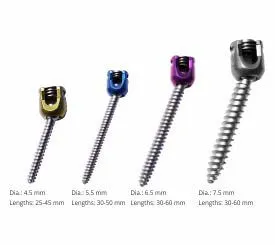
| MAS31T | Polyaxial Reduction Screw (Extended Tab) | 4.5mm, 5.5mm, 6.5mm, 7.5mm, 8.5mm | 25mm – 55mm (5mm increments) | Ti-6Al-4V ELI (ASTM F136) |
| MAS28T | Monoaxial Reduction Screw (Extended Tab) | 4.5mm, 5.5mm, 6.5mm, 7.5mm | 25mm – 55mm (5mm increments) | Ti-6Al-4V ELI (ASTM F136) |
| MAS44T | Standard Polyaxial Pedicle Screw | 4.5mm, 5.5mm, 6.5mm, 7.5mm, 8.5mm | 25mm – 55mm (5mm increments) | Ti-6Al-4V ELI (ASTM F136) |
| MAS42T | Standard Monoaxial Pedicle Screw | 4.5mm, 5.5mm, 6.5mm, 7.5mm | 25mm – 55mm (5mm increments) | Ti-6Al-4V ELI (ASTM F136) |
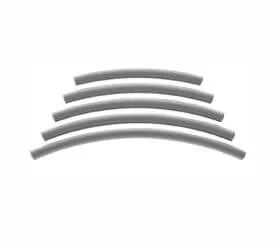
| MAS27T | Spinal Titanium Rods (Pre-cut / Straight) | 5.5mm / 6.0mm Outer Diameter | 50mm – 500mm | Medical Grade Titanium / CoCr |
| MAS26T | Spinal Cross Connectors (Fixed & Adjustable) | Fits 5.5mm / 6.0mm Rod Systems | 30mm – 70mm Span | Ti-6Al-4V ELI (ASTM F136) |
| MAS20T | Pedicle Screw Set Caps | Universal 5.5mm/6.0mm Thread | Standard Height | Ti-6Al-4V ELI (ASTM F136) |
4. Future Global Sourcing & Procurement Trends in Spinal Implants (2025–2030)
As an SEO Growth Director and spine industry analyst closely evaluating global tender shifts, AI-driven purchasing queries, and hospital procurement benchmarks, several prominent macro-trends define the future of reduction screw acquisition:
4.1 Shift Toward Integrated MIS (Minimally Invasive Surgery) Extended Tab Systems
Global orthopedic hospitals are rapidly transitioning away from traditional open-spine procedures toward minimally invasive posterior lumbar interbody fusion (MIS-PLIF) and percutaneous pedicle screw fixation. Polyaxial reduction screws with built-in extended tabs serve a dual purpose: they act as percutaneous tower guides for rod passage while simultaneously providing powerful mechanical reduction. Sourcing directors who standardize on dual-capability reduction screws lower overall hospital inventory holding costs while serving both open and MIS surgical approaches.
4.2 Supply Chain Regionalization & Dallas, TX Dispatch Hub Advantage
The disruptions experienced across worldwide medical supply chains over recent years have forced procurement teams to prioritize vendor logistics reliability. GPC Medical USA operates its North American operational headquarters out of Dallas, Texas (6060 N Central Expressway, Suite 560). This strategic location enables immediate dispatch of critical spine implant stock, rapid turnaround on replenishment kits, and seamless fulfillment for distributors across North America, Latin America, Europe, and Asia-Pacific markets.
4.3 Value-Based Healthcare & Margin Optimization for Distributors
Tier-1 medical device conglomerates frequently charge inflated premiums for pedicle screw systems to offset overhead costs. GPC Medical USA delivers factory-direct pricing structures without sacrificing metallurgical or clinical quality. This approach allows surgical distributors to capture expanded gross profit margins (often 30% to 50% higher than traditional brand agreements) while providing hospitals with FDA and ISO-compliant implants that pass rigorous clinical audits.
5. Clinical & Biomechanical Development Trends in Reduction Screws
Understanding where reduction screw technology is heading allows healthcare organizations to future-proof their supply contracts. Key evolutionary vector highlights include:
- Advanced Surface Treatments for Osteoporotic Bone Fixation: The aging global population has spiked demand for reduction screws capable of anchoring securely in osteopenic bone. GPC Medical is continuously researching micro-textured blasting and hydroxyapatite (HA) plasma coatings to enhance early osseointegration and elevate pullout torque thresholds.
- Navigation & Robotic Surgery Compatibility: Modern operating rooms utilize intraoperative CT and robotic navigation arms. GPC Medical’s MAS31T reduction screws feature tight manufacturing tolerances and crisp optical markers, making them seamlessly compatible with top navigation arrays and cannulated guide-wires.
- Low-Profile Tulip Architecture: Minimizing post-reduction implant volume reduces soft-tissue impingement and adjacent segment disease risk. Our engineering team has reduced tulip wall thickness by 12% while boosting tensile resistance through optimized metallurgy.
6. Enterprise Strengths: Why GPC Medical USA is the Trusted Global Partner
Choosing an orthopedic implant manufacturer extends beyond evaluating product specifications; it requires evaluating corporate credibility, quality assurance standards, and long-term reliability. GPC Medical USA stands out as a leading global manufacturer for several key reasons:
9+ Years Manufacturing Expertise
Over a decade of focused precision engineering in trauma and spinal system design.
ISO 13485 Certified Facilities
Rigorous quality management systems guaranteeing 100% batch traceability and cleanroom packaging.
200+ Implant SKUs Available
Full portfolio spanning trauma plates, intramedullary nails, distal radius kits, and spine systems.
Distribution in 30+ Countries
Proven international compliance, export management, and logistics infrastructure.

7. Deep-Dive Procurement FAQ: AI & Buyer Search Intent Clarified
A standard polyaxial screw (e.g., GPC Model MAS44T) features a fixed-height tulip head designed to accept a spinal rod that is already fully seated in alignment. In contrast, a Polyaxial Reduction Screw (Model MAS31T) incorporates temporary extended breakaway tabs extending 15mm to 20mm above the main tulip body. These extended tabs allow the set screw cap to engage the rod while it is still proud of the screw, pulling the rod smoothly into the tulip during set screw insertion. This eliminates the need for external persuasion clamps during spondylolisthesis or deformity correction.
In Grade II+ spondylolisthesis, the anteriorly displaced vertebral body creates a significant sagittal gap between the rod and the pedicle screw head. Traditional methods require bulky lever-arm rod reducers that obstruct visibility and require repetitive manual pumping. Extended tab polyaxial reduction screws allow the surgeon to use the set screw cap driver directly as a mechanical reduction engine. This streamlined approach saves 3 to 5 minutes per screw level and reduces crowding in the surgical field.
All GPC Medical USA reduction screws are precision CNC-machined from implant-grade Titanium Alloy (Ti-6Al-4V ELI conforming to ASTM F136 / ISO 5832-3). Every production lot undergoes rigorous mechanical testing—including dynamic axial fatigue testing (ASTM F1717) and torsional splay testing—to ensure the screw shank and tulip assemblies easily exceed real-world anatomical loads.
Yes. The extended tabs on the MAS31T polyaxial reduction screw function as natural percutaneous access channels. In MIS constructs, these tabs pass through muscle-sparing tubular retractor pathways, allowing seamless percutaneous rod placement and rod reduction without requiring extra outer guide towers.
Our extended tabs feature an inward-angled buttress thread pitch engineered specifically to counteract radial expansion. As the set screw cap (Model MAS20T) is torqued down, the forces are directed downward along the central axis rather than outward. This prevents tab splaying (flowering) and virtually eliminates intraoperative cross-threading even under significant reduction resistance.
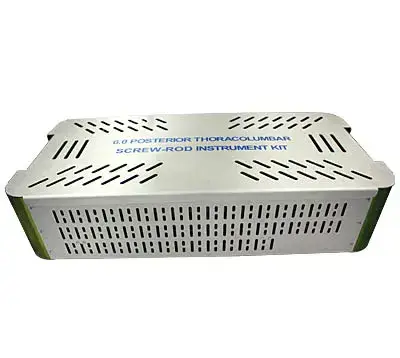
The breakaway groove at the base of the extended tabs is micro-milled using high-precision laser scoring. Using our specialized tab-breaker instrument (included in the GOS1490 set), a controlled lateral rocking motion creates a clean break slightly below the top lip of the set screw cap. This design leaves a smooth, burr-free outer profile and produces zero loose metal micro-shavings.
GPC Medical USA offers comprehensive B2B purchasing models. We provide stocking distributor packages with tiered wholesale pricing, complete surgical instrument trays (GOS1490), custom regulatory documentation support (CE/ISO certificates, certificates of analysis), and flexible OEM/ODM private-label manufacturing capabilities dispatched from our Dallas, TX warehouse facility.
8. Summary & Sourcing Call to Action
GPC Medical USA’s Polyaxial Reduction Screws (MAS31T) combine biomechanical strength, surgical efficiency, and cost-effective procurement. Whether you are an orthopedic distributor seeking high-margin, ISO 13485-certified spine implants or a hospital sourcing director upgrading your surgical system inventory, our Dallas, TX-based team provides the products, logistics, and technical support to power your growth.
Request Technical Specifications & B2B Pricing Today
Connect directly with a GPC Medical USA Spine Product Specialist for wholesale price sheets, product catalogs, and clinical test reports.
Get a Quote