1. Clinical Overview & Anatomic Challenges in Distal Radius Fixation
Distal radius fractures constitute approximately 17.5% of all adult traumatic fractures worldwide, making them one of the most frequently encountered orthopedic injuries in emergency trauma departments. Treatment modalities have evolved significantly over the past two decades, transitioning from conservative external fixation and smooth Kirschner wire pinning to rigid, low-profile internal fixation utilizing anatomically contoured volar locking distal radius plates.
The distal radius anatomical arch presents unique biomechanical hurdles. Achieving anatomical reduction of the articular surface while restoring radial inclination (normally ~22°), volar tilt (normally ~11°), and radial length (~11–12 mm) is essential to prevent post-traumatic radiocarpal osteoarthritis, chronic wrist pain, and functional range-of-motion deficits. Global surgeons increasingly demand implants that allow stable fixation in osteoporotic bone, minimal soft tissue impingement (specifically regarding the Flexor Carpi Radialis [FCR] tendon and extensor pollicis longus [EPL]), and early joint mobilization.
Why Volar Locking Plates Outperform Dorsal Plating Options
Historical dorsal plating approaches suffered from elevated rates of extensor tendon tenosynovitis and tendon rupture due to minimal subcutaneous tissue coverage on the dorsal wrist aspect. Contemporary volar locking plates take advantage of the spacious volar pronator quadratus space, providing robust mechanical support while keeping the implant insulated from flexor and extensor tendon pathways.
2. Featured Distal Radius Implants & Systems Recommendation
At GPC Medical USA, Inc., our distal radius implant system is engineered to solve complex intra-articular and extra-articular fracture challenges (AO/OTA Type 23-A, 23-B, and 23-C). Manufactured under strict ISO 13485 quality control parameters in Dallas, TX, our systems offer precise anatomical fit requiring minimal intraoperative plate bending.
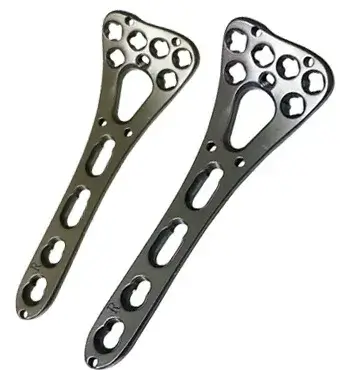
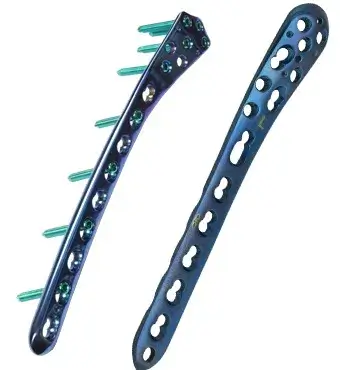
Our complete Distal Radius System incorporates several distinct configuration options tailored for diverse surgeon preferences and patient anatomies:
- Narrow & Standard Volar Locking Plates: Available in 2 to 6 shaft hole configurations for standard metaphyseal fractures.
- Wide / Juxta-Articular Volar Plates: Designed for complex comminuted intra-articular fractures requiring multi-planar subchondral peg and screw support.
- Radial Styloid Fixation Plates: Specialized rim plates engineered for isolated dorsoradial or palmar radial styloid fragment buttressing.
- Dedicated Surgical Instrument Sets: Custom stainless steel drill guides, depth gauges, torque-limiting drivers, and anatomical benders designed for ergonomic surgical workflow.
3. Biomechanical Engineering & Technical Specifications
To assist healthcare procurement teams, biomedical engineers, and hospital purchasing officers in validating technical compliance, the table below details the exact mechanical and metallurgical parameters of GPC Medical USA's Distal Radius Implant line.
| Technical Parameter | GPC Medical USA Specification | Clinical / B2B Benefit |
|---|---|---|
| Material Grade | Titanium Alloy Ti-6Al-4V ELI (ASTM F136) / ISO 5832-3 | Superior biocompatibility, non-magnetic MRI compatibility, high fatigue strength. |
| Plate Profile Thickness | 1.5 mm – 2.0 mm ultra-low tapered distal edge | Eliminates soft-tissue irritation & reduces FCR tendon friction. |
| Screw Diameter System | 2.4 mm Locking / 2.7 mm Cortex & Locking Screws | Optimal compromise between screw thread shear force and bone preservation. |
| Angular Stagger Angle | 15° Polyaxial / Variable-Angle Conical locking mechanism | Allows surgeons to steer screws around joint surfaces into dense subchondral bone. |
| Anatomical Pre-Contour | 3D CAD modeled according to global metaphyseal data | Drastically reduces intraoperative plate contouring time in operating room. |
| Surface Finish | Type II Anodization (Color Coded Titanium) | Prevents cold welding between screw threads and plate hole, enhancing removal safety. |
The biomechanical stability of volar locking plates relies on the concept of a fixed-angle construct. In traditional non-locking plates, stability is derived from friction generated between the plate and the periosteum, which can compromise bone blood supply and risk primary loss of reduction under load. In contrast, GPC Medical's fixLOCK threaded plate-screw interface transforms the implant into a single structural unit. This scaffold transfers mechanical stress across the fracture zone without compressing the periosteal vasculature, significantly decreasing rates of secondary volar collapse in elderly osteoporotic populations.
4. Global Procurement & Future Sourcing Trends (2025–2030)
As healthcare systems shift toward value-based purchasing, ambulatory surgery center (ASC) expansions, and centralized supply chains, the global market for distal radius implants is undergoing significant structural shifts. Purchasing directors and global distributors must align their procurement strategies with four key emerging industry trends:
Trend 1: Accelerated Shift toward Sterile Single-Use Procedure Kits
Hospitals are actively seeking to eliminate the high labor and capital costs associated with sterilizing traditional reusable instrument trays. Sterile-packed, pre-assembled distal radius implant kits—containing a pre-contoured plate, disposable drills, and pre-selected screw sizes—are gaining rapid market share across North American and European outpatient surgical centers. GPC Medical USA provides custom OEM kit packaging capabilities to meet this growing demand.
Trend 2: Supply Chain Rationalization & Direct Factory Partnerships
The disruption of global medical logistics in recent years has forced hospital groups and regional medical distributors to bypass multi-tiered intermediary vendors. Purchasing managers are establishing direct relationships with certified manufacturers like GPC Medical USA. By acquiring factory-direct pricing from our Dallas warehouse, procurement officers achieve cost savings ranging between 25% and 40% while maintaining uncompromising product quality and steady inventory safety stocks.
Trend 3: Regulatory Standardization & Traceability Requirements
Stringent global medical device frameworks, such as the European Union Medical Device Regulation (EU MDR 2017/745) and US FDA Unique Device Identification (UDI) mandates, require full supply chain transparency. Modern distributors must source distal radius implants from certified facilities providing 100% laser-etched UDI barcode traceability, raw material batch certification, and documented gamma-sterilization options.
Trend 4: Demand for Variable-Angle Locking Technology over Fixed-Angle
While first-generation volar locking plates utilized monoaxial fixed-angle screw holes, surgeon demand has overwhelmingly shifted toward variable-angle (polyaxial) locking technology. Variable-angle systems allow intraoperative freedom (up to 15° cone) to target small, highly specific fracture fragments—such as the dorsal lunate facet rim—without risking intra-articular screw penetration. GPC Medical's fixLOCK system integrates polyaxial capability across its distal radius line.
Interested in upgrading your trauma product catalog with high-margin volar distal radius systems?
Get a Quote5. Technological Innovations in Radius Fracture Fixation
The field of upper extremity trauma surgery is benefiting from advanced materials science and manufacturing automation. Key technological developments shaping the future of distal radius hardware include:
A. Ultra-Low Profile Tapered Plate Edges
Soft tissue irritation—specifically tenosynovitis of the flexor pollicis longus (FPL) tendon—remains a known post-operative concern in distal radius fixation. Innovations in precision CNC Swiss machining allow GPC Medical to produce distal radius plates with smooth, rounded contours and distal plate borders less than 1.5mm thick, effectively tucking the hardware proximal to the watershed line.
B. Subchondral Peg and Screw Placement Matrix
Modern plates feature dual-row screw arrangements distally. The distal row supports the articular surface immediately beneath the cartilage (subchondral bone raft), while the proximal row locks the subchondral raft to the radial shaft. This matrix arrangement optimizes load distribution and prevents articular surface settling during healing.
6. Enterprise Advantage & E-E-A-T: Why Choose GPC Medical USA
When selecting an orthopedic manufacturing partner for distal radius implants, medical equipment distributors and hospital purchasing committees require proven reliability, regulatory compliance, and robust corporate backing. GPC Medical USA, Inc. stands out as an industry leader through our core enterprise advantages:
9+ Years of Manufacturing Mastery
Founded in 2016 in Dallas, Texas, GPC Medical USA brings almost a decade of specialized expertise in trauma and spine manufacturing, continuously upgrading clinical design based on surgeon feedback.
ISO 13485 Certified Production
Our manufacturing plants operate under strict ISO 13485 quality management systems, utilizing Swiss CNC multi-axis turning lathes and German CMM testing instruments.
200+ Trauma & Spine SKUs
Beyond distal radius systems, our catalog spans fixLOCK Plating, intraHEAL Intramedullary Nails, and spineHEAL Pedicle Screws, providing a single-source solution for distributors.
Global Footprint in 30+ Countries
We successfully export and provide regulatory dossier support to orthopedic implant distributors across North America, Latin America, Europe, the Middle East, and Asia-Pacific.
Our commitment to the E-E-A-T guidelines (Experience, Expertise, Authoritativeness, and Trustworthiness) ensures that every distal radius implant shipped from our Dallas logistics hub meets exacting clinical specifications, backed by comprehensive mechanical testing data (static compression, dynamic fatigue testing per ASTM F382 standards).
7. Frequently Asked Sourcing Questions (FAQ) for Global Buyers
Below are detailed responses to the most frequent technical, commercial, and regulatory queries submitted by global medical equipment buyers and hospital supply officers:
Our Distal Radius Locking Plates and screws are primarily manufactured from high-strength Titanium Alloy (Ti-6Al-4V ELI conforming to ASTM F136 / ISO 5832-3). Titanium provides exceptional fatigue resistance, lower modulus of elasticity (reducing stress shielding), and full MRI compatibility. High-grade 316L Stainless Steel options are also available upon specialized distributor request.
The fixLOCK variable-angle mechanism utilizes an unthreaded or fine-threaded conical plate hole paired with a hardened screw head. Surgeons can insert 2.4mm locking screws at variable angles up to 15° in any trajectory relative to the plate axis. Upon final tightening, the screw threads deform and lock securely into the plate wall, creating a rigid fixed-angle construct at the surgeon's desired trajectory.
We maintain flexible MOQ arrangements tailored to client capacity. For established regional stocking distributors, standard inventory starter packages begin with minimal SKU requirements. For private label OEM manufacturing, MOQs depend on specific packaging and custom laser-marking requirements. Contact our sales team for tailored commercial terms: Get a Quote.
Yes. All GPC volar distal radius plates are anatomically pre-contoured specifically for Left and Right wrist anatomy. The anatomic curve mimics the volar radial inclination and pronator quadratus ridge, reducing the need for intraoperative plate bending which can degrade metal fatigue strength.
Every shipment from GPC Medical USA includes a complete quality dossier: ISO 13485 Quality System Certificate, Certificate of Conformance (CoC), Material Mill Certificates validating raw titanium origin, Sterility Validation Reports (if ordering sterile pack), and complete UDI batch tracking documentation.
FPL tendon friction occurs when plates are positioned distal to Soong's watershed line. GPC distal radius plates are engineered with ultra-thin, highly polished distal margins (less than 1.5mm thickness) and recessed screw heads, creating a smooth transition that sits flush under the pronator quadratus tissue layer.
GPC supplies a dedicated, color-coded Distal Radius Surgery Instrument Kit (Set Ref: GOS-DRS24). The set includes 1.8mm drill bits, calibrated depth gauges, polyaxial drill guides, self-retaining Star/T8 drivers, plate bending pliers, and K-wire positioning pins housed in an autoclavable aluminum sterilization tray.
Yes, GPC Medical USA provides comprehensive OEM and private label manufacturing services. We offer custom laser engraving of distributor logos, localized language labeling, custom box packaging, and localized barcode compliance for government hospital tenders.
