1. Executive Overview: The Role of Monoaxial Pedicle Screws in Modern Spinal Fixation
In contemporary posterior spinal fusion procedures, pedicle screw instrumentation represents the gold standard for achieving segmental rigid stabilization. Among the various internal fixation options available to spine surgeons, Monoaxial Pedicle Screws (also referred to as fixed-angle pedicle screws) play a vital role in clinical scenarios demanding maximum corrective leverage, structural rigidity, and torsional strength.
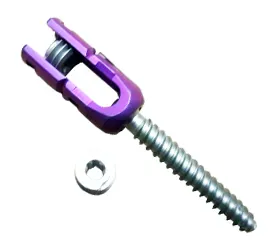
Unlike polyaxial pedicle screws—which feature a spherical head mechanism permitting multiaxial angular deflection prior to set screw tightening—monoaxial pedicle screws possess a rigid, perpendicular alignment between the tulip head channel and the threaded shank. This fixed orientation eliminates movement between the screw head and body, allowing direct transmission of vector forces from the longitudinal 5.5mm titanium rod into the pedicle and vertebral body.
Global healthcare procurement teams, hospital purchasing committees, and specialized medical device distributors must evaluate pedicle screw choices not merely on immediate piece-price cost, but through the lens of biomechanical performance, long-term fusion success, pull-out resistance, and surgical efficacy. This guide delivers high-density technical analysis and procurement strategy tailored to global surgical buyers seeking reliable, high-yield spinal implants.
Authority & Quality Guarantee — GPC Medical USA
As an established US-headquartered orthopedic manufacturer in Dallas, TX, GPC Medical USA brings over 9 years of direct engineering expertise and ISO 13485 certified quality management. Our spineHEAL spinal instrumentation is engineered to deliver zero-defect precision, validated by finite element analysis (FEA) and static/dynamic fatigue testing compliant with ASTM F1717 guidelines.
2. Technical Specifications & Metallurgical Excellence
The performance of spinal fixation devices depends fundamentally on raw material purity, precision thread machining, and strict manufacturing tolerances. GPC Medical USA manufactures Monoaxial Pedicle Screws using high-grade Ti-6Al-4V ELI (Extra Low Interstitial) Titanium Alloy conforming to ASTM F136 / ISO 5832-3.
Titanium Ti-6Al-4V ELI offers superior biocompatibility, elevated strength-to-weight ratio, exceptional resistance to cyclic stress fatigue, and minimal magnetic interference during post-operative Magnetic Resonance Imaging (MRI) or Computed Tomography (CT) diagnostics.
Core Metallurgical & Structural Parameters
- Material Composition: Medical Titanium Grade 5 / Ti-6Al-4V ELI (ASTM F136).
- Thread Configuration: Dual-lead, deep-cut buttress thread pattern designed for fast insertion and optimized pedicular bone purchasing power in both cortical and cancellous bone structures.
- Tulip Mechanism: Monoblock fixed tulip housing engineered to fit standard 5.5mm diameter titanium rods (Model MAS27T).
- Drive System: Hexagonal / Star-drive internal socket preventing driver cam-out and stripping under high insertion torque.
- Surface Treatment: Anodized anti-glare finish enhancing surface hardness, reducing fretting wear, and optimizing osseous contact.
Dimensional Matrix Table: Model MAS42T Series
| Model Code | Thread Diameter | Available Lengths | Rod Compatibility | Primary Clinical Indication |
|---|---|---|---|---|
| MAS42T-40 | 4.0 mm | 25mm – 45mm (5mm steps) | Ø 5.5 mm Rod | Upper Thoracic Fixation / Pediatric Deformity |
| MAS42T-50 | 5.0 mm | 30mm – 50mm (5mm steps) | Ø 5.5 mm Rod | Mid-to-Lower Thoracic Pedicle Placement |
| MAS42T-60 | 6.0 mm | 35mm – 55mm (5mm steps) | Ø 5.5 mm Rod | Thoracolumbar Junction & Lumbar Fixation |
| MAS42T-70 | 7.0 mm | 35mm – 55mm (5mm steps) | Ø 5.5 mm Rod | Standard Lumbar Fixation (L1–L5) |
| MAS42T-85 | 8.5 mm | 40mm – 55mm (5mm steps) | Ø 5.5 mm Rod | Sacral S1 Fixation / Revision Pedicle Anchor |
Featured System Implants & Accessories
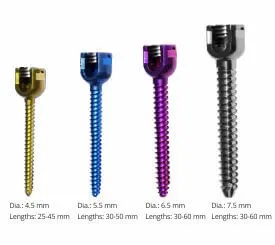
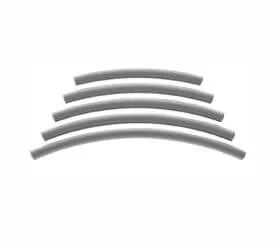
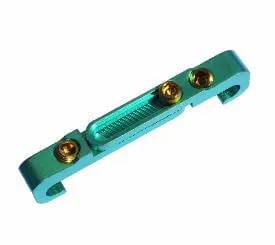
3. Biomechanical Comparative Analysis: Monoaxial vs. Polyaxial vs. Monoaxial Reduction Screws
For purchasing officers and clinical evaluators, understanding the mechanical trade-offs between different screw designs is essential for maintaining balanced hospital inventory while meeting surgeon preferences.
1. Monoaxial Pedicle Screws (Model MAS42T)
Mechanical Characteristic: Fixed, unyielding 90-degree relationship between tulip and screw thread.
Primary Advantage: Provides maximum derotation leverage. Forces applied to the rod during lateral translation or apical vertebral derotation maneuvers in adolescent idiopathic scoliosis (AIS) are directly transferred to correct rotational deformities.
Clinical Application: Complex spinal deformity corrections, traumatic vertebral fractures, spondylolisthesis reduction, and rigid thoracolumbar constructs requiring strict sagittal vector control.
2. Polyaxial Pedicle Screws (Model MAS44T)
Mechanical Characteristic: Spherical head seated within the tulip allowing a 40-degree cone of anatomical angulation.
Primary Advantage: Significantly simplifies rod seating in multi-level degenerative spinal cases where pedicles are misaligned or sclerotic.
Clinical Application: Lumbar degenerative disc disease, spinal stenosis fusion, and multi-segmental constructs where speed of rod insertion is paramount.
3. Monoaxial Reduction Screws (Model MAS28T)
Mechanical Characteristic: Rigid monoaxial head incorporating extended breakout tabs (extended threads).
Primary Advantage: Allows gradual, controlled mechanical reduction of high-grade spondylolisthesis or severe sagittal imbalance directly down into the tulip channel without needing auxiliary rod pushers.
Clinical Application: High-grade spondylolisthesis reduction and severe kyphotic deformity correction.
4. Global Sourcing & Procurement Trends for Spine Implants (2025–2030)
The global spinal implants market is undergoing structural shifts driven by value-based healthcare, tightening regulatory frameworks (such as US FDA 510(k) and EU MDR), and heightened demand for supply chain transparency. Medical procurement leaders must adapt to several critical procurement dynamics:
Trend 1: Demand for Dual-System Hybrid Construct Options
Surgeons increasingly favor hybrid construct techniques—combining monoaxial pedicle screws at apical deformity segments for rigid rotational correction with polyaxial pedicle screws at construct extremities for ease of rod seating. Global distributors must stock modular systems that allow seamless integration between monoaxial and polyaxial variants on a unified 5.5mm rod platform.
Trend 2: Supply Chain Resilience & Direct OEM-Distributor Models
Healthcare institutions are seeking to mitigate risk by establishing partnerships with manufacturers that maintain centralized inventory hubs in key logistical nodes. By shipping directly from Dallas, Texas, GPC Medical USA eliminates multi-tiered distributor markup while guaranteeing rapid fulfillment across North America, Latin America, Europe, the Middle East, and Asia-Pacific.
Trend 3: Standardized Universal Instrument Trays
Hospitals are actively seeking to reduce sterilization costs and operating room turnover times by consolidating surgical trays. The GPC Medical spineHEAL Spine Surgery Instrument Set (Model GOS1490) features ergonomic, color-coded drivers, taps, reamers, and torque-limiting screwdrivers designed to handle both monoaxial and polyaxial screws within a single compact tray.
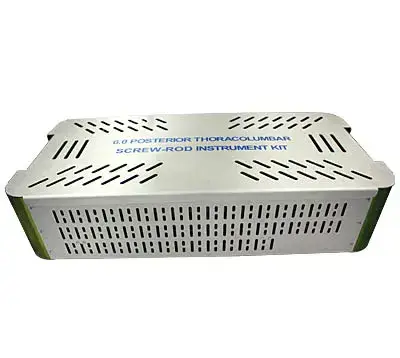
5. Technological & Engineering Innovations in Monoaxial Pedicle Screw Systems
Monoaxial pedicle screw engineering has evolved far beyond basic threaded fasteners. Modern biomechanical advancements incorporated into GPC Medical USA implants focus on reducing surgical implant failure, preventing thread stripping, and improving long-term osseous integration:
Dual-Lead Variable Thread Pitch
The spineHEAL monoaxial pedicle screw incorporates a dual-lead thread geometry that doubles the insertion speed per revolution compared to single-thread implants. This reduces operative time while minimizing bone-bed thermal necrosis during manual screwing. Furthermore, the variable thread depth increases pedicular purchase in osteopenic bone by converting compressive forces into lateral radial stress.
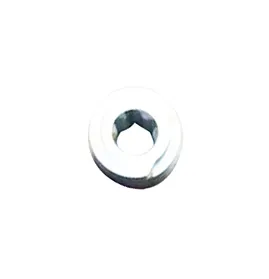
Buttress Anti-Cross-Threading Lock Nut (Pedicle Screw Cap MAS20T)
A frequent surgical frustration during high-stress spinal fusion procedures is set screw cross-threading within the tulip channel. GPC Medical USA pedicle screw caps feature a reverse-angle buttress thread profile that directs clamping forces inward rather than outward, eliminating tulip splaying and ensuring a guaranteed locking torque at 12 Nm.
6. Enterprise Advantages: Why Global Buyers Partner with GPC Medical USA
GPC Medical USA, Inc. combines nearly a decade of dedicated orthopedic and spinal implant manufacturing experience with aggressive B2B commercial advantages designed for hospital tender success and high-margin distributor growth.
- Dallas, Texas Operations: Headquartered at 6060 N Central Expressway, Suite 560, Dallas, TX 75206, offering rapid North American order processing and centralized international export logistics.
- Full SKU Availability & Inventory Depth: Over 200 trauma and spine SKUs readily stocked, enabling seamless fulfillment of large-scale emergency hospital requisitions.
- ISO 13485 Quality Standard Enforcement: Every batch undergoes 100% optical coordinate measurement, spectrographic alloy analysis, and destructive torque-to-failure testing.
- Factory-Direct Margin Optimization: Eliminating intermediary broker channels allows global distributors to achieve up to 35-50% improved gross margins while maintaining competitive pricing for public tenders.
- Dedicated OEM / White-Label Support: Tailored brand packaging, custom tray layout configurations, and localized regulatory registration support provided to established regional distribution partners.
7. Frequently Asked Questions (FAQ) — Procurement & Technical Inquiry
Below are authoritative answers to common technical and commercial queries submitted by international procurement officers, hospital purchasing agents, and spine surgeons.
Partner with GPC Medical USA for Premium Spine Implants
Expand your surgical distribution portfolio with high-precision Monoaxial Pedicle Screws and comprehensive spine system solutions. Competitive B2B pricing, ISO 13485 certified quality, and fast dispatch from Dallas, TX.
Get a Quote