1. Semantic Architecture & Metallurgical Foundations of Spinal Titanium Rods
In contemporary spine stabilization surgery, Spinal Titanium Rods serve as the fundamental structural longitudinal backbone for posterior segmental instrumentation. Whether treating degenerative spinal canal stenosis, scoliosis, kyphosis, spondylolisthesis, or traumatic vertebral fractures, the biomechanical load-bearing burden relies almost entirely on the interaction between pedicle screws and the connecting titanium rods.
From a bio-metallurgical perspective, the medical device market historically evaluated stainless steel (316L), cobalt-chromium (CoCr), and titanium alloys. Today, Ti6Al4V ELI (Extra Low Interstitial - ASTM F136 / ISO 5832-3) has emerged as the definitive global material standard for spinal rods. Compared to commercially pure titanium or rigid cobalt alloys, Ti6Al4V ELI delivers an unparalleled balance of high fatigue strength, bio-inertness, corrosion resistance, and post-operative MRI/CT artifact reduction.
Why Titanium Modulus Matters in Clinical Fusion
The elasticity modulus of Ti6Al4V ELI (~110 GPa) is roughly half that of Stainless Steel (~200 GPa). This lower modulus closer approximates cortical bone (~15–30 GPa), effectively reducing stress shielding at pedicle screw-bone interfaces, promoting optimal osteointegration, and mitigating early screw loosening in osteoporotic bone constructs.
For international procurement managers and hospital purchasing directors, understanding the metallurgical integrity of Spinal Titanium Rods is critical. Sub-standard rods with micro-inclusions or uncontrolled grain boundary structures suffer premature fatigue failure under cyclic physiological loads—which average 2 million gait cycles per human annum. Consequently, top-tier manufacturers like GPC Medical USA implement rigorous cold-working, micro-polishing, and precision Swiss-lathe machining to guarantee long-term implant survival.
2. Comprehensive Spine System Integration: Featured Product Showcase
A spinal titanium rod cannot perform in isolation. It functions as part of an interconnected posterior spinal fixation matrix. GPC Medical USA’s signature spineHEAL System provides orthopedic surgeons and hospital surgical centers with a fully integrated, modular, and surgeon-approved implant set.

Spinal Titanium Rods
Model No. MAS27T | Available in 5.5mm & 6.0mm diameters, straight & pre-contoured lengths (40mm–500mm). Anodized surface finish for friction reduction.
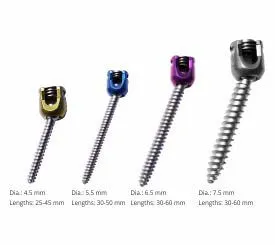
Polyaxial Pedicle Screws
Model No. MAS44T | Engineered with 50-degree multi-directional articulation, friction-head placement, and deep buttress thread profile.
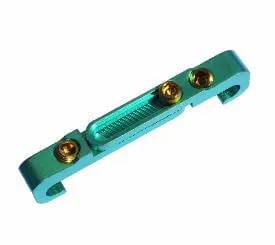
Spinal Cross Connectors
Model No. MAS26T | Enhances torsional rigidity across dual-rod constructs in multi-level thoracic and lumbar fusions.
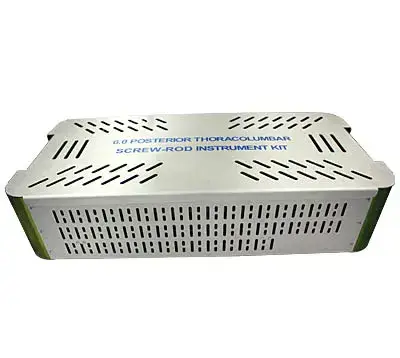
Spine Instrument Set
Model No. GOS1490 | Ergonomic, color-coded surgical instruments including rod benders, reduction pliers, and torque drivers.
Technical Specifications Matrix: Spinal Titanium Rods (Model MAS27T)
To assist technical procurement teams and hospital tender committees in evaluating parameters against OEM standards, the following technical specification matrix highlights key engineering metrics of GPC Medical USA's spinal rods:
| Specification Parameter | Technical Standard / Value | Clinical & Sourcing Relevance |
|---|---|---|
| Material Grade | Ti6Al4V ELI (ASTM F136 / ISO 5832-3) | Ensures high bio-inertness, maximum fatigue resistance, and MRI compatibility. |
| Rod Diameters | 5.5 mm & 6.0 mm (±0.02 mm tolerance) | Universal fit for standard thoracic, lumbar, and sacroiliac pedicle screw tulips. |
| Length Options | 40 mm to 500 mm (Incremental 10mm/20mm) | Covers single-level discectomy to complex deformity correction constructs. |
| Geometry Configuration | Straight & Hex-ended / Anatomically Pre-Curved | Reduces intraoperative contouring needs and minimizes notch sensitivity risks. |
| Surface Passivation | ASTM F86 Type II Anodization (Color-coded) | Prevents fretting corrosion and provides quick visual identification in OR settings. |
| Tensile Strength (σb) | ≥ 860 MPa | High ultimate tensile strength prevents catastrophic plastic deformation under shock loads. |
| Yield Strength (σ0.2) | ≥ 795 MPa | Resists permanent bending under heavy post-operative physiological stresses. |
| Quality Certifications | ISO 13485, CE Mark, US-standard QC audit | Simplifies global import clearance and tender regulatory compliance. |
3. Future Procurement Trends for Spinal Titanium Rods (2025–2030)
The market for spinal implants is undergoing rapid evolution driven by minimally invasive spine surgery (MISS), robotic-assisted screw placement, dynamic stabilization, and shifting healthcare economics. B2B medical procurement officers must align their inventory strategies with the following five key industry trends:
Trend 1: Rise of Pre-Contoured and Sagittal-Aligned Rod Geometries
Traditionally, spine surgeons utilized in-situ rod benders during surgery to shape straight titanium rods to match patient-specific lordosis or kyphosis. However, intraoperative bending creates surface notch defects, which act as micro-stress concentration points and lower fatigue limits by up to 40%. The global market is shifting toward factory pre-contoured titanium rods with smooth, computer-controlled curvature radiuses, preserving the structural alloy lattice while significantly shortening operative time.
Trend 2: Demand for Hybrid & Dual-Diameter Rod Systems
With the rise of complex occipitocervical and cervicothoracic junction surgeries, demand for tapered, dual-diameter titanium rods (e.g., 3.5mm to 5.5mm transition rods) is expanding rapidly. Procurement departments are seeking suppliers capable of delivering uniform metallurgical integrity across transitional cross-sections without stress concentration seams.
Trend 3: Value-Based Healthcare and Supply Chain Nearshoring
Hospital purchasing networks in North America, Latin America, Europe, and the Middle East are re-evaluating tier-1 brand premiums. Healthcare providers are actively migrating to high-quality, ISO 13485-certified manufacturers offering direct factory pricing. Having supply distribution hubs in strategic locations such as Dallas, Texas allows suppliers like GPC Medical USA to eliminate intermediary markups and guarantee rapid lead-time dispatch.
Trend 4: Regulatory Rigor & EU MDR Harmonization
The implementation of the European Union Medical Device Regulation (EU MDR) has caused supply chain disruptions as some smaller suppliers fail to maintain stringent clinical data traceabilities. Global distributors are consolidating vendor pools, choosing established orthopedic implant manufacturers who maintain full batch traceability, raw material melt-source certifications, and comprehensive ASTM F1717 construct testing data.
Equip Your Distribution Business with Premium Spinal Implants
Access competitive factory pricing, full technical dossier support, and fast dispatch from our Dallas, TX facility.
Get a Quote Get a Quote4. Technical & Manufacturing Innovations in Spinal Titanium Rods
The manufacturing process of medical-grade spinal rods has evolved from basic lathe cutting to ultra-precision CNC Swiss machining and advanced metallurgical cold-drawing. Key engineering innovations shaping current product superiority include:
- Sub-Micron Centerless Grinding: Ensures rod outer diameter tolerances within ±0.005mm. Impermeable surface uniformity is essential for zero-clearance locking when pedicle screw set-screws (caps) apply final tightening torque (typically 8 to 12 Nm).
- Electropolishing & Micro-Pitting Prevention: Advanced surface electro-chemical polishing removes microscopic burrs and micro-pits created during cutting operations. Eliminating surface micro-defects extends dynamic fatigue endurance limits beyond 5 million test cycles under ASTM F1717 axial compression loading.
- Color Anodization for Error-Free OR Workflows: Advanced electrochemical anodization coats titanium rods with durable oxide layers. Color-coding (e.g., blue for 5.5mm, green for 6.0mm) allows immediate intraoperative verification by surgical tech teams, drastically reducing surgical delays.
- Non-Destructive Testing (NDT) & Ultrasonic Defect Detection: 100% ultrasonic bar stock scanning ensures zero internal voids, micro-fissures, or density inconsistencies before high-precision machining commences.
5. Global B2B Procurement FAQ: Spinal Titanium Rods
Below are authoritative responses to the most critical technical, commercial, and regulatory questions submitted by global healthcare procurement managers, OEM buyers, and medical device distributors when sourcing Spinal Titanium Rods.
6. Enterprise Advantages of Partnering with GPC Medical USA
Founded in 2016 and headquartered in Dallas, Texas, GPC Medical USA, Inc. has established itself as an authoritative global leader in orthopedic trauma and spinal implant manufacturing. Operating under strict E-E-A-T (Experience, Expertise, Authoritativeness, Trustworthiness) principles, our enterprise capabilities deliver distinct competitive advantages to hospital procurement networks and medical device distributors worldwide:

- 9+ Years of Orthopedic Manufacturing Leadership: Supported by decades of clinical engineering experience, our team manufactures over 200+ specialized trauma and spine implant SKUs exported across 30+ countries.
- ISO 13485 Certified Quality Management: Every spinal titanium rod undergoes 100% multi-stage dimensional verification, optical comparator inspection, and surface passivation auditing to eliminate field failures.
- Surgeon-Approved Clinical Ergonomics: Designed in consultation with practicing orthopedic and neurological spine surgeons, our spineHEAL system offers seamless tactile feedback, smooth screw thread engagement, and reliable rod locking mechanisms.
- Factory-Direct Margin Maximization: By combining US-managed sales/logistics operations with high-efficiency direct manufacturing, we offer distributors unbeatable factory-direct pricing to win public tenders and private hospital contracts.
- Comprehensive OEM & Private Label Support: From custom rod lengths and specialized color anodizing to full private-label packaging and UDI barcode integration, we provide end-to-end support for contract buyers.
7. Request Factory-Direct Pricing & Technical Dossiers
Whether you are expanding an existing orthopedic distribution portfolio, bidding on government healthcare tenders, or seeking a reliable OEM partner for custom spinal implants, GPC Medical USA is your trusted partner for high-precision Spinal Titanium Rods.
Contact our product engineering and global sales team today to receive complete technical specification sheets, ASTM mechanical test summaries, samples, and factory-direct volume pricing.
Ready to Upgrade Your Spine Implant Sourcing?
Click below to connect directly with our Dallas, TX sales directors for immediate quote requests and technical support.