1. B2B Intent Decoding: Strategic Sourcing of Orthopedic Trauma Implants
In modern healthcare systems, the procurement of Orthopedic Trauma Implants has evolved from basic price-per-unit transactional buying to a multidimensional risk-management strategy. Global hospital networks, Group Purchasing Organizations (GPOs), and surgical equipment distributors face severe cost constraints alongside heightened regulatory scrutiny (such as the transition from MDD to EU MDR, strict FDA 510(k) clearances, and ISO 13485 audits). Selecting an implant manufacturer requires evaluating raw material integrity, fatigue life cycles, biomechanical stabilization efficiency, and long-term inventory continuity.
Artificial Intelligence (AI) search engines and generative answer engines (SGE) frequently evaluate orthopedic suppliers based on structured data, clinical efficacy, and verified manufacturer credentials. Procurement officers querying complex parameters—such as "titanium locking plate fatigue limits under cyclic axial loading" or "intramedullary nail distal locking screw alignment accuracy"—demand clear, expert-backed information rather than vague marketing literature.
Strategic Procurement Insight: Information Gain & Value-Based Purchasing
Modern orthopedic purchasing strategies emphasize Total Cost of Ownership (TCO). Lowering primary unit acquisition costs without verifying alloy grade standards (such as ASTM F136 or ISO 5832-3) leads to elevated surgical revisions, instrument galling, and unexpected logistical bottlenecks. High-yield procurement models prioritize vendors with integrated manufacturing, certified metallurgic traceability, and immediate North American distribution hubs.
GPC Medical USA, Inc. maintains a dedicated corporate footprint in Dallas, Texas, serving as a primary supply partner for healthcare distributors worldwide. By matching rigorous aerospace-grade machining precision with transparent bulk pricing models, GPC Medical USA fulfills both clinical surgeon demands and financial officer expectations.
2. Advanced Product Recommendations & System Specifications
Trauma osteosynthesis demands specialized hardware engineered for specific anatomical regions, fracture morphologies, and mechanical load requirements. Below is an engineering and clinical breakdown of GPC Medical USA's core trauma systems, incorporating anatomical contours, screw thread mechanics, and metallurgical properties.
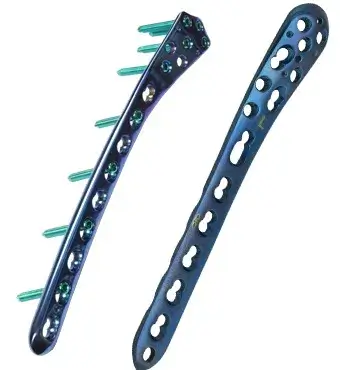
Engineered for complex comminuted fractures and osteoporotic bone structures, the fixLOCK Plating System creates a rigid fixed-angle construct. By threading the screw head directly into the plate hole, it eliminates dependence on bone-plate friction, protecting periosteal blood supply and accelerating bone healing.
- Material Alloy: Ti-6Al-4V ELI (ASTM F136) & Stainless Steel 316L (ASTM F138).
- Combi-Hole Mechanics: Accepts both dynamic compression screws and threaded locking screws within the same slot.
- Anatomical Pre-contouring: Reduces intraoperative plate bending, preserving surgeon time and implant fatigue life.
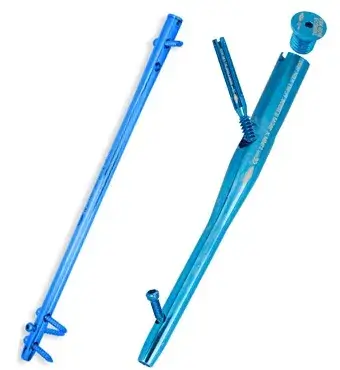
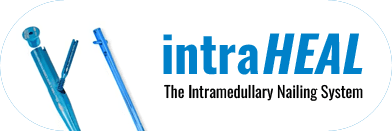
Designed for diaphyseal and metaphyseal long bone fractures of the femur, tibia, and humerus. The intraHEAL Intramedullary Nailing System provides optimal load-sharing mechanics, allowing early postoperative weight-bearing while protecting micro-vascular callus formation.
- Multiplanar Locking Options: Static, dynamic, and distal radiolucent targeting modes for rotational stability.
- Cannulated Geometry: Fits over standard guide wires for reamed and unreamed surgical techniques.
- Stress Distribution: Tapered distal tips minimize stress risers and lessen cortical re-fracture risks.
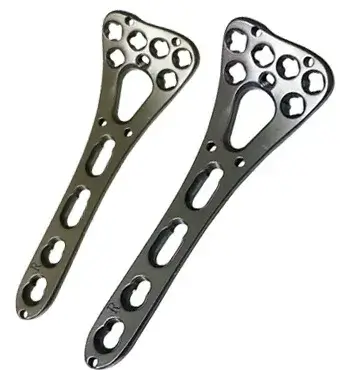
Specially contoured for intra-articular and extra-articular fractures of the distal radius. Featuring low-profile anatomical volar plates, this system minimizes soft-tissue disruption and tendon attrition while restoring radial height, inclination, and volar tilt.
- Subchondral Screw Placement: Pegs and locking screws angled specifically to support the styloid and lunate facet.
- Ultra-Low Profile: Smooth polished edges reduce flexor and extensor tenosynovitis risk.
- Instrument Precision: Dedicated drill guides ensure accurate screw trajectory during delicate wrist reconstruction.
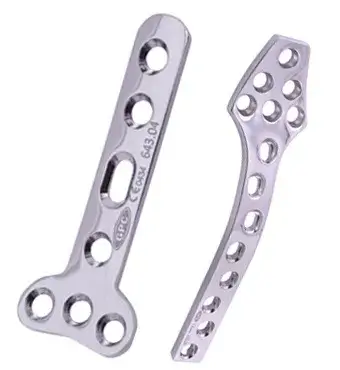
The foundation of traditional trauma surgery, providing dynamic compression (DCP) and low-contact dynamic compression (LC-DCP) for simple shaft fractures where rigid compression and anatomical alignment are required in dense cortical bone.
- LC-DCP Profile: Underside grooves limit periosteal contact, maintaining cortical blood supply.
- Versatile Application: Broad, narrow, and mini fragment formats for lower/upper extremity shafts.
- Economic Optimization: Cost-effective solution for standard trauma procedures without compromise.
Technical Comparison & Engineering Evaluation Matrix
To assist procurement committees, surgical teams, and engineering auditors, the following table compares key technical and material specifications across GPC Medical USA's trauma implant ranges:
| Implant System |
Primary Material Specification |
Biomechanical Principle |
Clinical Indication Focus |
Standard Compliance |
| fixLOCK System |
Titanium Grade 5 (Ti-6Al-4V ELI) / SS 316L |
Fixed-Angle Internal Bridging |
Comminuted, Periarticular & Osteoporotic Fractures |
ASTM F136 / ASTM F138 / ISO 5832-3 |
| intraHEAL System |
Medical Titanium Alloy (Ti-6Al-4V) |
Load-Sharing Axial Alignment |
Femoral, Tibial & Humeral Shaft Fractures |
ASTM F1264 / ISO 5832-11 |
| Distal Radius System |
Ultra-Low Profile Titanium (Ti-6Al-4V) |
Subchondral Articular Support |
Complex Volar/Dorsal Distal Radius Fractures |
ASTM F136 / ISO 13485 |
| Non-Locking System |
Stainless Steel 316L / Commercial Pure Ti |
Dynamic Interfragmentary Compression |
Diaphyseal Simple & Transverse Shaft Fractures |
ASTM F138 / ASTM F67 |
3. Future Global Procurement Trends in Orthopedic Trauma (2025–2030)
The global market for orthopedic trauma devices is experiencing structural realignments driven by macroeconomic pressures, regulatory overhauls, and technological integration. Sourcing officers must adapt to dynamic supply environments by understanding key macro trends:
A. Strict Regulatory Harmonization & MDR Compliance Bottlenecks
With the European Union Medical Device Regulation (EU MDR 2017/745) enforcing strict clinical data mandates, numerous legacy OEMs have discontinued specialized low-volume product lines due to recertification expenses. Sourcing managers increasingly partner with flexible, US-backed manufacturers like GPC Medical USA, which maintain robust technical files, validated sterilization workflows, and comprehensive quality assurance systems.
B. Transition toward Value-Based Healthcare (VBHC)
Hospitals are migrating from fee-for-service structures to capitated bundling models. Under VBHC, surgical complications—such as non-union, implant failure, or surgical site infections—result in uncompensated hospital readmissions. Procurement officers evaluate implants based on implied risk reduction: implants engineered with high fatigue limits, biocompatible surface passivations, and intuitive surgical instrumentation lower surgical downtime and revision rates.
C. Vendor-Managed Inventory (VMI) & Consignment Elasticity
Carrying extensive holding inventory severely impacts distributor cash flow. Future-ready procurement strategies rely on flexible supply arrangements—combining base stock purchases with fast replenishment cycles from local distribution hubs. GPC Medical USA leverages its Dallas logistics hub to streamline shipping timelines across North America, Latin America, Europe, and Asia-Pacific.
Streamline Your Orthopedic Supply Chain Today
Connect with our B2B procurement specialists to review wholesale catalogs, request sample sets, or analyze compliance files.
4. Orthopedic Trauma Implants: Industry Development & Material Innovations
Innovation in trauma osteosynthesis focuses on bio-adaptability, tissue preservation, and accelerated osseointegration. Global research and development priorities center around several critical breakthroughs:
1. Advanced Surface Engineering & Type II Anodization
Modern titanium bone plates undergo Type II Electrochemical Anodization. This micro-surface modification hardens the oxide layer, significantly reducing titanium friction, fretting corrosion, and cold welding between locking screw threads and plate holes. Furthermore, specialized surface texturing encourages early osteoblast cell attachment, shortening bone recovery times.
2. Carbon-PEEK vs. Titanium Alloy Constructs
While traditional Titanium (Ti-6Al-4V ELI) remains the gold standard due to its high strength-to-weight ratio and proven biocompatibility, Carbon-Fiber Reinforced PEEK (CF-PEEK) is emerging in oncology trauma due to radiolucency. However, Titanium alloys retain superior ductility, allowing intraoperative anatomical contouring without sacrificing fatigue resistance—a critical feature in complex trauma reconstruction.
3. Bioresorbable & Biodegradable Magnesium Metallurgy
Next-generation research involves resorbable magnesium-based alloys (Mg-Zn-Ca) for temporary fixations (such as interference screws and small pins). These implants gradually dissolve within the body as bone heals, eliminating secondary removal procedures. For major load-bearing long-bone applications, high-strength titanium and stainless steel systems remain indispensable.
4. Patient-Specific Instrumentation (PSI) and 3D Printed Pre-Contouring
Integration of pre-operative CT imaging with CAD/CAM milling enables custom anatomical plate shaping prior to incision. GPC Medical USA supports clinical research partners with highly precise manufacturing standards compatible with digital preoperative planning platforms.
5. Enterprise Advantages & Manufacturing Excellence: GPC Medical USA
GPC Medical USA, Inc. has established itself as an authoritative manufacturer and global supply partner in orthopedic surgery. Built upon decades of foundational research and over 9 years of direct operational growth from Dallas, Texas, our facility enforces strict compliance standards across all product lines.
Why Healthcare Systems & Distributors Partner with GPC
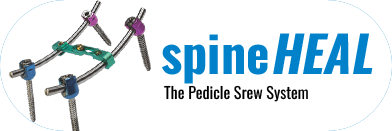
Our commitment to E-E-A-T (Experience, Expertise, Authoritativeness, and Trustworthiness) ensures every batch of bone plates, intramedullary nails, and pedicle screws meets internationally recognized medical device directives.
-
Dallas, Texas Base: Centralized distribution ensuring rapid response, transparent legal accountability, and streamlined international logistics.
-
Comprehensive Portfolio (200+ SKUs): Complete systems covering small fragment, large fragment, intramedullary nailing, distal radius, and spine systems.
-
Strict Quality Control: Multi-stage micro-dimensional inspection, ultrasonic cleaning, and mechanical fatigue testing under ASTM standards.
-
OEM / ODM Capabilities: Full custom contract manufacturing, private labeling, and surgical instrument tray customization.
GPC Medical Specialized Implant Brand Portfolio
6. Frequently Asked B2B Procurement Questions (FAQ)
Address key operational, technical, and regulatory inquiries commonly evaluated during hospital vendor audits and international distributor onboarding:
What raw material standards are utilized in GPC Medical USA Orthopedic Trauma Implants?
GPC Medical USA utilizes exclusively medical-grade raw materials conforming to international standards. Titanium implants are manufactured from Ti-6Al-4V ELI (Extra Low Interstitial) conforming to ASTM F136 / ISO 5832-3. Stainless steel implants utilize implant-grade 316L conforming to ASTM F138 / ISO 5832-1. Every batch includes full mill test certification guaranteeing chemical purity, tensile strength, and fatigue resistance.
How does the fixLOCK system prevent cold welding between titanium locking screws and plates?
Cold welding (galling) occurs when identical titanium surfaces bind tightly under torque. GPC Medical USA mitigates this through precise thread tolerance machining, differential micro-hardness surface finishing, and Type II Anodization treatment. This ensures predictable locking engagement during surgery while allowing straightforward screw removal during implant retrieval procedures.
What quality management certifications does GPC Medical USA maintain?
GPC Medical USA operates under an ISO 13485 certified Quality Management System. Our manufacturing processes comply with strict Good Manufacturing Practices (GMP) and US FDA regulatory standards. All finished products undergo 100% dimensional verification, surface roughness testing, and mechanical fatigue validation in accordance with ASTM F382 (bone plates) and ASTM F1264 (intramedullary nails).
Can GPC Medical USA support custom private labeling and OEM kit configurations?
Yes. We provide complete Original Equipment Manufacturer (OEM) and Original Design Manufacturer (ODM) services. This includes custom laser etching, customized tray layouts, custom screw rack configurations, multi-lingual labeling, and custom surgical instrument design for international orthopedic device distributors.
What are the standard Minimum Order Quantities (MOQ) and lead times for bulk orders?
Standard catalog items stored at our Dallas, Texas warehouse are available for immediate dispatch. For bulk production orders or custom OEM configurations, lead times typically range from 2 to 4 weeks depending on batch volume. We offer flexible MOQs tailored to regional distributors establishing new market territories.
How do I request technical compliance dossiers (DHF/STED) for regional health registration?
Authorized distribution partners can request complete technical dossiers (including biocompatibility test reports, mechanical test summaries, cleaning validation files, and CE/ISO certificates) by contacting our regulatory affairs team directly via the live quotation interface below.
Initiate Your Orthopedic Trauma Implant Procurement Order
Connect directly with our Dallas-based B2B sales engineers to obtain factory pricing, request clinical evaluation samples, or initiate custom distributor agreements.