Orthopedic & Spine Surgery Insights — GPC Medical USA Blog
Knowledge Hub · GPC Medical USA

Orthopedic & Spine Surgery Insights

Explore technical guides, surgical updates, and medical implant developments from industry experts.

Spine System Innovations — GPC Medical USA
Spine Implants & Tech
Advancements in Spine Fixation

In-depth analysis of pedicle screw design, spinal fusion techniques, and clinical outcome optimization.

Trauma Implant Articles — GPC Medical USA
Trauma Innovations
Trauma Surgery Trends

Latest updates on intramedullary nailing systems, locking plates, and fracture management protocols.

Orthopedic & Spine Surgery Insights

Discover expert articles, clinical technical guides, and medical device updates from GPC Medical USA.

Get Catalog
0%

Choosing the right Monoaxial Pedicle Screws requires more than comparing prices, materials, or catalog photographs. A reliable buying decision connects implant design with anatomy, fixation goals, surgical technique, and long-term patient safety. In the operating room, small details matter: thread geometry, tulip strength, driver compatibility, screw diameter, and the consistency of the locking mechanism.

Dr. Lawrence G. Lenke, a respected spinal deformity surgeon, has said, “Every patient and every deformity is different.” This principle should guide every purchasing decision. Monoaxial Pedicle Screws may offer strong directional control and predictable rod alignment, but they are not automatically suitable for every spinal level or clinical situation. Their performance depends on accurate placement, bone quality, construct planning, and appropriate instrumentation.

This 2026 buying guide examines the features that deserve closer attention. It considers alloy quality, surface finish, size availability, pullout resistance, and system compatibility. It also reviews manufacturer documentation, sterilization information, traceability, and clinical support. These points can feel less exciting than product claims. They are often more important.

A screw that looks robust may still create problems if its driver interface is poorly matched. A low-cost system may become expensive after missing instruments or limited technical support are added. Buyers should also question unclear test data and broad performance promises. No purchasing guide can replace a qualified surgeon’s judgment, institutional protocols, or applicable regulatory requirements. Some recommendations may need revision as new evidence emerges. That is not a weakness. It is part of responsible medical decision-making.

2026 Best Monoaxial Pedicle Screws Buying Guide

What Are Monoaxial Pedicle Screws and How Do They Work?

2026 Best Monoaxial Pedicle Screws Buying Guide

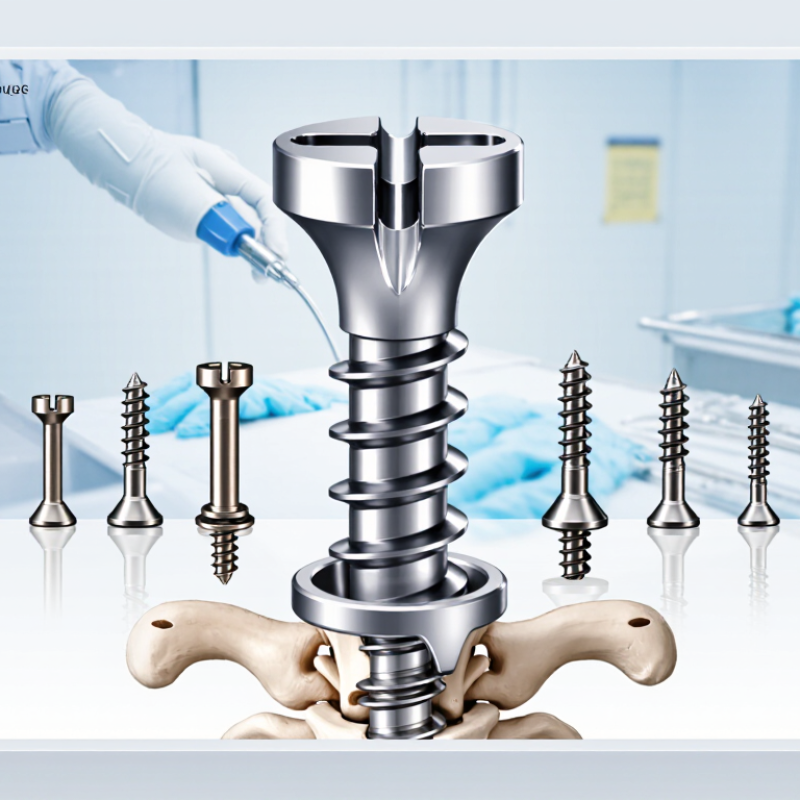
Monoaxial pedicle screws are spinal fixation devices with a fixed-angle head. Unlike polyaxial screws, their heads do not swivel after insertion. The screw shaft and head act as one stable unit. This structure helps transfer corrective forces directly from the rod to the vertebra. It can support alignment during procedures involving spinal instability, deformity, or selected fractures.

During placement, a trained spine surgeon guides the screw through the pedicle into the vertebral body. Imaging helps confirm the entry point, trajectory, and depth. The rod then sits inside the fixed head and is secured with a locking cap. Because the head offers limited angular adjustment, accurate screw positioning matters greatly. Small detail. A few degrees can affect rod seating and construct alignment.

When comparing monoaxial pedicle screws in 2026, buyers should review thread geometry, shaft diameter, head height, material documentation, and compatibility with the intended rod system. Titanium alloy is commonly selected for its strength and imaging characteristics, but specifications must be verified in official technical documents. Experienced surgical teams may value the rigidity of a fixed head, while others may prefer easier rod alignment from a mobile head. Neither design is automatically better. That depends on anatomy, surgical goals, and technique. Even experienced users can misjudge bone quality or trajectory, so training, imaging, and documented quality controls remain essential.

2026 Best Monoaxial Pedicle Screws Buying Guide - What Are Monoaxial Pedicle Screws and How Do They Work?

Buying Dimension Typical Information Why It Matters What to Verify Before Purchase
Definition A monoaxial pedicle screw has a fixed, non-angulating head that remains aligned with the screw shaft. The fixed screw-head orientation can provide a direct and predictable connection to a spinal rod. Confirm that the product is monoaxial rather than polyaxial or uniplanar.
Mechanical Working Principle The threaded screw is placed into the vertebral pedicle, while the fixed head receives the rod. A locking cap secures the rod in the head. The construct transfers corrective and stabilizing forces through the screw, rod, and locking-cap assembly. Review the complete approved construct, including rods, set screws, instruments, and compatible components.
Common Anatomical Use Thoracic, thoracolumbar, and lumbar posterior spinal fixation, subject to the device indication and surgeon judgment. Pedicle anatomy changes substantially by spinal level, so screw selection must be individualized. Check the cleared or approved anatomical levels and indications in the instructions for use.
Typical Screw Diameter Many thoracolumbar systems offer approximate diameters from 4.0 mm to 8.5 mm, although the available range differs by system and indication. Diameter affects pedicle fit, purchase, insertion profile, and the risk of pedicle-wall violation. Match the diameter to preoperative imaging, pedicle dimensions, bone quality, and the approved sizing chart.
Typical Screw Length Common thoracolumbar offerings are approximately 25 mm to 55 mm, with shorter and longer options available in some systems. Length should provide adequate vertebral purchase without excessive anterior or lateral penetration. Use CT or other appropriate imaging and follow the manufacturer’s sizing and surgical technique guidance.
Thread Design Options may include standard, coarse, or variable-pitch threads; some systems also provide a partially threaded or fenestrated design. Thread geometry influences insertion feel, primary fixation, and interaction with cancellous and cortical bone. Compare thread profile, pitch, tip design, and approved indications rather than selecting by diameter alone.
Head Configuration The head is fixed relative to the shaft and commonly includes a U-shaped rod-receiving channel with a threaded locking-cap interface. Fixed alignment can support rod reduction and segmental correction but provides less in-situ angular accommodation than a polyaxial head. Assess rod trajectory, screw-head alignment, reduction requirements, and available instrumentation.
Common Materials Implants are commonly manufactured from implant-grade titanium alloys such as Ti-6Al-4V ELI; some systems use cobalt-chromium alloy components. Material affects strength, stiffness, corrosion resistance, imaging characteristics, and compatibility with other components. Verify the material specification, applicable implant-material standard, and whether mixed-metal constructs are permitted.
Rod Compatibility Rod diameters commonly include approximately 5.5 mm or 6.0 mm in posterior thoracolumbar systems, but exact compatibility is system-specific. A rod must seat correctly in the fixed head and be secured by the compatible locking cap. Confirm rod diameter, rod material, locking-cap thread, and approved component combinations.
Bone Quality Considerations Osteoporotic or otherwise poor-quality bone may require an alternative fixation strategy, larger approved dimensions, augmentation, or additional fixation. Reduced bone density can decrease screw purchase and increase the risk of loosening or pull-out. Review bone quality, augmentation instructions, contraindications, and evidence for the intended patient population.
Imaging and Navigation Monoaxial screws may be used with fluoroscopy, navigation, or robotic guidance when the complete system and workflow support those techniques. Image guidance can assist trajectory planning and assessment of screw placement but does not replace anatomical judgment. Check radiographic markers, tracking compatibility, imaging artifacts, and the relevant technique instructions.
MRI Status MRI safety is device-specific. Many spinal implants are labeled MR Conditional rather than universally MR Safe. Heating, displacement, image artifact, field strength, and scanning conditions must be evaluated for the complete implant construct. Follow the exact MRI conditions in the current instructions for use; do not infer status from material alone.
Instrument Interface Insertion drivers, tulips, rod reducers, persuaders, and torque-limiting handles are generally proprietary to the implant system. Correct engagement reduces the risk of drive-socket damage, cross-threading, incomplete locking, and inaccurate insertion. Confirm instrument availability, sterilization instructions, torque limits, and training requirements.
Standards and Regulatory Documentation Relevant documentation may reference standards such as ASTM F543 for metallic bone screws and ISO 5832-3 for wrought titanium alloy used in surgical implants. Testing standards and regulatory clearance help demonstrate conformity, but they do not replace clinical evaluation or appropriate surgical selection. Request current regulatory clearance, material certificates, mechanical test data, and the complete instructions for use.
Best-Fit Selection Summary Choose a monoaxial screw when fixed head alignment, direct rod control, and predictable rod reduction are clinically appropriate. The design may be advantageous in selected deformity, trauma, and posterior stabilization procedures, but it is not automatically superior to a polyaxial design. Base the final choice on anatomy, pathology, bone quality, construct plan, surgeon preference, regulatory status, and the approved surgical technique.

Note: Dimensions and configurations shown above are representative ranges for commonly marketed thoracolumbar systems, not universal specifications. Always use the current manufacturer instructions for use and applicable regulatory requirements.

Key Design Features and Materials to Evaluate

2026 Best Monoaxial Pedicle Screws Buying Guide

Key Design Features and Materials to Evaluate

Monoaxial pedicle screws hold the screw head in a fixed alignment with the shaft. This design can improve rod seating and correction control during spinal fixation. Evaluate the tulip head, thread profile, core diameter, and drive interface together. A deep, consistent thread may improve purchase in suitable bone, but aggressive threads can complicate revision. The head should resist deformation under tightening force.

Small details matter.

Material selection affects strength, imaging, and tissue compatibility. Titanium alloy is widely considered for its balance of fatigue resistance, corrosion resistance, and MRI compatibility. Cobalt-chromium rods can provide higher stiffness, although excessive rigidity may influence load transfer. Stainless steel remains relevant in selected systems, but users should verify alloy specifications and imaging conditions. Material claims should match recognized testing evidence, not only marketing language.

Inspect fatigue data, pullout testing, and dimensional tolerances from independent or accredited laboratories. Confirm compliance with applicable medical-device standards in the intended market. Surgical experience also matters: a smooth driver connection can reduce handling errors during insertion.

Still, no screw performs equally in every anatomy. Bone density, trajectory, and construct length change the result. I would avoid judging quality from thread appearance alone. That is an easy mistake.

Review sterilization status, traceability, packaging integrity, and instructions for use before purchase. In practice, the best choice may be the system that offers predictable handling, not the highest advertised strength.

How to Match Screws With Surgical and Patient Requirements

Choosing monoaxial pedicle screws starts with the surgical plan, not the product label. A fixed-angle head can improve construct control during rod seating and alignment. However, it may offer less flexibility when anatomy varies. The surgeon should assess the planned approach, fixation levels, rod contour, and correction goals before selecting screw geometry.

Patient factors matter just as much. CT images can reveal pedicle width, cortical boundaries, and unusual anatomy. Bone density testing may guide decisions for osteoporotic patients. Screw diameter should respect the pedicle wall, while length should support purchase without excessive anterior penetration. Shorter screws are not automatically safer. They may provide limited fixation in weak bone.

Small details affect handling. Check head clearance, tulip dimensions, thread design, and driver compatibility across the entire construct. Confirm sterile packaging, traceability, and applicable regulatory approval before use. A sizing chart helps, but it cannot replace direct imaging review. In practice, measurement errors still happen, especially when anatomy is rotated or poorly visualized. Recheck the trajectory.

There is no universal best screw. A robust choice matches the patient’s anatomy and the surgeon’s technique. Document the reasoning. Reconsider it when bone quality, deformity, or revision history changes. Some systems appear efficient on the back table but complicate rod alignment. That difference becomes obvious only during planning and hands-on evaluation. Decisions should remain with qualified spinal professionals using current clinical evidence and institutional protocols.

Safety, Compatibility, and Quality Standards to Check

2026 Best Monoaxial Pedicle Screws Buying Guide

Safety begins with evidence, not polished catalog images. A 2023 systematic review of 12 comparative studies reported breach rates near 2% with robotic assistance, versus about 6% with freehand placement. These figures describe surgical technique, not screw quality alone. Review pullout strength, fatigue testing, corrosion resistance, and clinical follow-up separately. ASTM F543 supports mechanical testing, while ISO 14971 requires documented risk management. Small details matter. Check thread sharpness, tulip locking, and driver engagement under load.

Compatibility is equally practical. Confirm screw diameter, length, thread pitch, rod size, and reduction capacity. The implant must match the complete instrument set. Ask for validated torque limits and connection drawings. ISO 13485 certification indicates a quality-management system, but it does not prove every product performs equally. Request batch traceability, sterilization validation, material certificates, and MRI safety information. A 2023 FDA MAUDE review also reminds buyers that event reports lack reliable exposure denominators, so raw complaint counts cannot establish failure rates.

Quality decisions need clinical judgment. I would compare independent test reports, not only supplier summaries. A perfect checklist does not exist. Some purchasing teams may overlook insertion feel, yet surgeons notice resistance changes quickly. Ask whether fatigue tests reflect expected spinal loads, whether samples came from routine production, and whether failures were disclosed. These questions can feel inconvenient, but they expose weak evidence before procurement.

2026 Best Monoaxial Pedicle Screws Buying Guide: Safety, Compatibility, and Quality Standards to Check

The chart compares minimum ultimate tensile-strength values specified for commonly used implant-material standards. These values support material screening, but they do not replace system-level fatigue, pull-out, torsion, corrosion, biological, and compatibility evaluations.

Reference standards: ASTM F67 for commercially pure titanium Grade 4, ASTM F136 for titanium alloy Ti-6Al-4V ELI, and ASTM F138 for wrought 18Cr-14Ni-2.5Mo stainless steel. Also check ASTM F543 for metallic bone-screw mechanical testing, ISO 10993 for biological evaluation, ISO 14971 for risk management, and ISO 13485 for quality management. Thread geometry, tulip/rod interface, driver connection, rod diameter, imaging compatibility, and instrument fit must be confirmed from the same validated system documentation because standards do not guarantee interchangeability.

How to Compare Suppliers, Pricing, and Long-Term Value

2026 Best Monoaxial Pedicle Screws Buying Guide

Comparing suppliers requires more than checking unit prices. Review material certificates, dimensional drawings, sterilization records, and traceability procedures. Ask whether each screw lot has documented inspection results. A reliable supplier should explain its quality system clearly, including applicable regulatory registrations and ISO 13485 certification. Request clinical evidence when available. Surgeon feedback can reveal handling issues that product brochures often hide. Small details matter, such as driver fit, thread sharpness, and packaging integrity.

Pricing should include the complete purchasing picture. Compare screw costs, instrumentation, shipping, training, and replacement policies. A cheaper screw may require extra tools or create inventory complications. Ask for tiered pricing and written terms for future orders. Check lead times carefully. Delayed implants can disrupt surgical schedules and increase administrative pressure. However, the lowest quote is not always poor value. A newer supplier may offer efficient production, but its long-term performance data could be limited.

Long-term value depends on consistency, support, and evidence. Evaluate complaint handling, batch recall procedures, and technical response times. Request samples for controlled evaluation, where permitted, before making a large commitment. Compare corrosion resistance, fatigue data, and compatibility with the intended system. Do not rely on one impressive test result. It can be incomplete. A practical scorecard can weight quality, service, clinical confidence, and total cost over three to five years. Revisit the decision annually, because supplier performance can change.

FAQS

What are monoaxial pedicle screws?

They are spinal fixation devices with a fixed-angle head. The head and shaft act as one stable unit. The head does not swivel after insertion.

How do monoaxial pedicle screws work during surgery?

A trained spine surgeon guides the screw through the pedicle into the vertebral body. Imaging confirms the entry point, trajectory, and depth. A rod sits inside the fixed head and is secured with a locking cap.

What is the main benefit of a fixed screw head?

The fixed head can transfer corrective forces directly from the rod to the vertebra. It may support alignment during selected spinal procedures. Accurate placement remains essential.

What design features should buyers examine?

Review thread geometry, shaft diameter, core diameter, head height, and drive-interface fit. Check whether the head resists deformation during tightening. Thread appearance alone is not enough.

Which materials are commonly considered?

Titanium alloy is commonly evaluated for strength, corrosion resistance, and imaging characteristics. Other systems may use stainless steel or different rod materials. Verify alloy details through technical documents.

How should buyers compare monoaxial and mobile-head designs?

Monoaxial screws may provide stronger alignment control. Mobile heads may make rod seating easier. Neither design is automatically better. Anatomy and surgical technique matter.

What supplier documents should be requested?

Request material certificates, dimensional drawings, sterilization records, and lot traceability. Review fatigue data, pullout testing, and dimensional tolerances. Confirm applicable medical-device requirements.

How should the total cost be assessed?

Include screws, instruments, shipping, training, replacements, and inventory needs. Check lead times and future-order terms. A low unit price may hide extra costs.

What quality checks matter before purchase?

Inspect packaging integrity, driver fit, sterilization status, and instructions for use. Ask about complaint handling and batch recall procedures. Small details matter.

What mistakes can occur when selecting these screws?

Buyers may focus on thread appearance or one impressive test result. That can be incomplete. I might also underestimate bone quality or trajectory. Controlled evaluation and imaging review reduce uncertainty.

Conclusion

This 2026 buying guide explains how Monoaxial Pedicle Screws provide stable, fixed-angle support in spinal fixation procedures and why their design should be carefully matched to surgical goals. It reviews important features such as screw diameter, length, thread profile, head geometry, strength, corrosion resistance, and the use of biocompatible materials. Understanding these factors can help medical professionals evaluate fixation performance, handling, and suitability for different anatomical conditions.

The guide also outlines how to select screws according to patient anatomy, bone quality, surgical technique, and imaging requirements. It highlights the importance of checking sterilization, traceability, compatibility with connecting components, quality management systems, and applicable regulatory standards. Finally, it presents practical methods for comparing suppliers, including product consistency, technical support, lead times, documentation, pricing, warranty terms, and total long-term value rather than focusing only on initial cost.

Liam

Liam

Liam is a skilled marketing professional with a deep expertise in our company's innovative product offerings. His passion for the industry drives him to stay ahead of market trends and continuously explore new strategies to amplify our brand's presence. With a keen eye for detail and a commitment......