Explore technical guides, surgical updates, and medical implant developments from industry experts.
In-depth analysis of pedicle screw design, spinal fusion techniques, and clinical outcome optimization.
Latest updates on intramedullary nailing systems, locking plates, and fracture management protocols.
Discover expert articles, clinical technical guides, and medical device updates from GPC Medical USA.
China has become an important manufacturing base for spinal implant components, including Spinal Cross Connectors. This guide introduces ten Chinese suppliers associated with these specialized devices and related spinal fixation systems. It focuses on evidence, not impressive claims alone.
The review considers product range, material control, machining capability, quality systems, and documented experience. It also examines whether suppliers provide drawings, technical specifications, traceability records, and responsive communication. These details matter when a connector must align accurately across bilateral rods during spinal fixation procedures. Small inconsistencies can affect assembly efficiency, surgical planning, and long-term confidence.
Regulatory readiness is another key consideration. Reliable suppliers should explain their quality management practices and identify applicable market requirements clearly. Certifications can support credibility, but they do not replace independent verification. Buyers should request current documents, sample evaluations, audit information, and realistic production timelines before making a decision.
No ranking is flawless. Supplier information may change, and public materials can present only part of a company’s capabilities. Some manufacturers may show strong machining skills but limited international support. Others may communicate well while offering less transparent technical evidence. That difference deserves attention.
This overview is intended for importers, distributors, medical device professionals, and engineering teams comparing potential partners in China. It does not replace regulatory, clinical, or legal review. Careful due diligence remains essential.
Spinal cross connectors are small orthopedic components used in posterior spinal fixation systems. They link two longitudinal rods across the spine. This creates a transverse connection between the left and right sides of the construct. In practical terms, the connector can improve rotational stability and reduce independent rod movement.
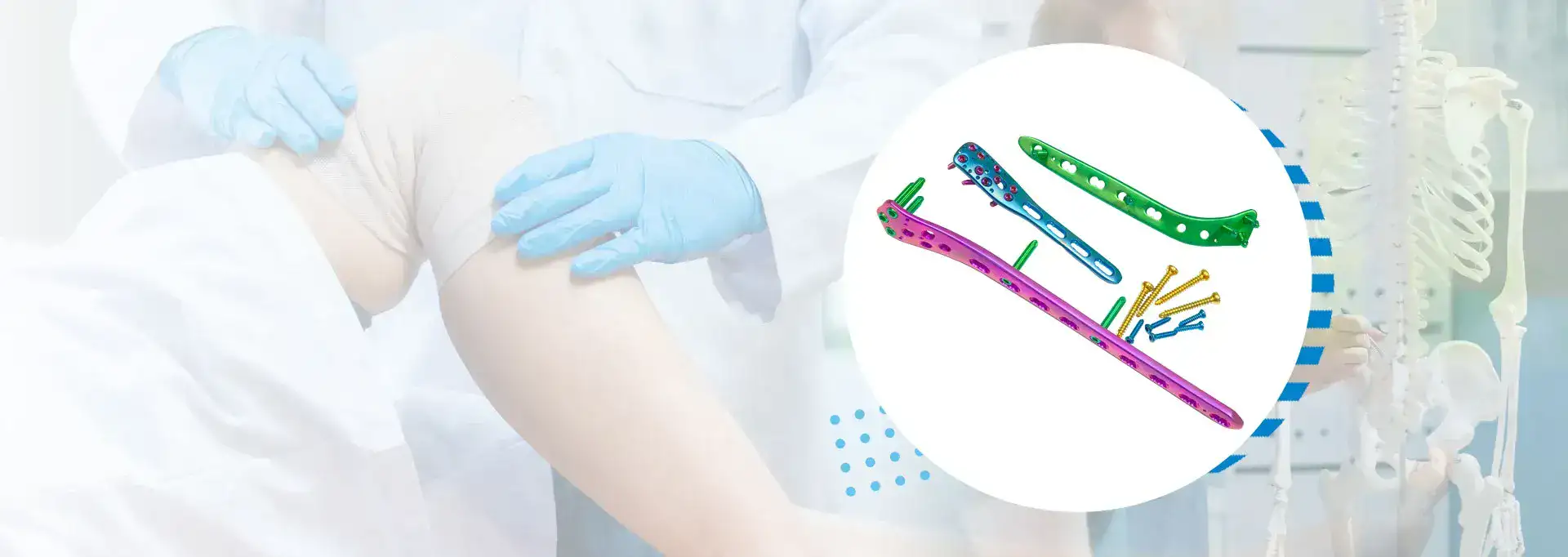
A typical cross connector includes two clamps, a central bridge, and locking screws. The clamps attach to compatible rods, while the bridge spans the midline. Dimensions, rod diameter, locking mechanism, and material must match the primary fixation system. Surgical teams also consider the patient’s anatomy, correction goals, and available space beneath the soft tissues. A connector should never be selected by appearance alone.
The device is usually placed after rod positioning and contouring. Proper tightening matters, but excessive force can damage threads or distort the assembly. A cross connector that feels secure on the table may still have poor alignment.
This detail is easy to overlook. Imaging, manufacturer specifications, and trained clinical judgment remain important during evaluation. There is no universal best design.
Hospitals comparing spinal cross connector suppliers should review testing data, traceability, quality controls, and technical support. Supplier claims deserve verification, especially when product compatibility affects the entire construct.
Evaluating Chinese spinal cross connector suppliers requires more than comparing catalog prices. Begin with the supplier’s medical-device experience, quality system, and production scope. Request current certifications, manufacturing addresses, and evidence of traceability for titanium or stainless-steel materials. Check whether incoming materials, machining, cleaning, and final inspection are controlled separately.
Ask for dimensional drawings, tolerance data, surface-finish requirements, and mechanical test reports. The connector should maintain secure fixation during simulated loading, not only look precise under inspection. Review fatigue testing, locking performance, corrosion resistance, and compatibility with the intended spinal fixation system. Sample parts can reveal burrs, uneven threads, poor markings, or inconsistent packaging. Small details matter.
Supplier reliability also depends on communication. Test response times with technical questions, change-notification procedures, complaint handling, and corrective-action records. Confirm production capacity through realistic lead-time discussions, not optimistic promises. A factory visit or independent audit can expose gaps between documented procedures and daily work. Still, audits are imperfect. A clean facility does not guarantee every batch is consistent. I would compare several production lots and retain inspection samples before approval. Price deserves attention, but unusually low pricing may signal thinner inspection, unstable sourcing, or unclear process ownership. Ask difficult questions early, and record every answer.
Recommended evaluation weighting for comparing ten suppliers without publishing company or brand information.
Product quality and regulatory compliance should receive the highest weighting because spinal implants are safety-critical medical devices. Material traceability, manufacturing capability, validation documentation, delivery reliability, customization support, and total cost should be reviewed together before selecting a supplier.
China’s Top 10 Spinal Cross Connector Suppliers are often compared by more than catalog size. Reliable suppliers usually offer titanium alloy or stainless-steel components with consistent machining quality. Their cross connectors should fit standard spinal fixation systems and maintain secure rod-to-rod stability. Small details matter.
A capable supplier provides dimensional drawings, material certificates, fatigue-test data, and batch traceability. Quality teams should also review ISO 13485 systems, inspection records, and sterilization compatibility.
During evaluation, ask about thread accuracy, locking torque, surface finish, and packaging protection. A scratched connector can create unnecessary concern during surgery. Clear technical support also helps hospitals and distributors avoid costly specification errors.
The top ten should not be judged by price alone. Production capacity, delivery consistency, customization control, and post-sale responsiveness deserve equal attention. Factory audits can reveal practical issues that brochures hide, including weak inspection lighting or incomplete records. That said, supplier rankings remain imperfect because product performance depends on design matching, surgical technique, and system compatibility. Buyers should request samples and independent verification before approval. A careful review may take longer, but it supports safer procurement and more reliable long-term cooperation.
China Top 10 Spinal Cross Connector Suppliers?
Comparing ten Chinese spinal cross connector suppliers requires more than checking catalog photos. The connector should match the selected rod diameter, screw system, and surgical technique. Experienced buyers usually request dimensional drawings, material certificates, and recent fatigue-test records. Common implant materials include titanium alloys meeting recognized medical material specifications. Surface finish matters too. Rough edges can complicate handling and create stress concentration points.
Quality systems provide a clearer comparison. Look for ISO 13485 certification, controlled supplier records, lot traceability, and documented inspection procedures. Strong manufacturers use coordinate measuring machines to verify hole spacing, clamp dimensions, and locking features. They should also explain cleaning, packaging, sterilization compatibility, and change-control practices. A certificate alone is not enough. Ask for the applicable test method and sample identification.
Manufacturing capability separates reliable suppliers from simple traders. CNC machining, validated heat treatment, and controlled passivation can improve consistency across production batches. A capable factory should show process-flow documents, inspection checkpoints, and corrective-action records without hiding weaknesses. Some suppliers may offer excellent machining but limited clinical documentation. Others may provide polished paperwork but weak engineering support. That trade-off deserves careful review. Request sample connectors, inspect thread engagement, and compare measured results with the drawings. Small deviations may seem harmless, yet they can affect assembly during a demanding procedure. No supplier is perfect. The best choice is the one that communicates limitations clearly and maintains evidence from design through shipment.
Choosing among China’s top ten spinal cross connector suppliers requires more than comparing prices or catalog thicknesses. WHO’s 2023 musculoskeletal health report estimates that 1.71 billion people live with musculoskeletal conditions worldwide. That demand makes quality control critical. Ask for an ISO 13485 certificate, then verify its scope, issuing body, and validity. The certificate should cover spinal implants, not only general metal processing.
Request material certificates for titanium or cobalt-chromium components. Confirm alloy grades against applicable ASTM or ISO requirements. Review fatigue, torsion, corrosion, dimensional, and locking-mechanism test reports. Samples reveal more. Measure hole spacing, screw engagement, surface finish, and connector alignment with your intended rod system. A supplier should provide batch numbers, raw-material traceability, inspection records, and controlled change notices. Paperwork matters.
Use an independent laboratory for sample testing when the order is significant. Check sterilization compatibility, packaging integrity, and shelf-life evidence if the components are supplied sterile. The ISO Survey of Management System Standard Certifications can help compare certification coverage by country, but certification alone cannot prove clinical performance. A factory visit is useful: observe calibration labels, clean handling, nonconforming-product control, and final inspection records. Do not trust a polished catalog. One weakness remains easy to miss: some suppliers outsource machining or coating without clearly disclosing it. Put every critical process, acceptance limit, audit right, and corrective-action timeline into the contract. A lower quote is not a lower risk.
| Rank | Supplier Reference | Core Product Scope | Common Materials | Customization Capability | Quality-System Evidence to Request | Typical Production Lead Time | Suggested Initial Order Size | Key Verification Point | Preliminary Fit |
|---|---|---|---|---|---|---|---|---|---|
| 1 | Supplier Profile A | Spinal cross connectors, rod-to-rod connectors, fixation accessories | Titanium alloy, commercially pure titanium, cobalt-chromium alloy | High; drawings, dimensions, surface finish, laser marking and packaging options | ISO 13485 certificate, ISO 14971 risk records, material certificates, process validation | 35–50 working days after design approval | 50–100 pieces for pilot production | Confirm fatigue testing, dimensional inspection and traceability by lot | Strong Candidate |
| 2 | Supplier Profile B | Posterior spinal fixation components and transverse connectors | Titanium alloy and stainless steel for compatible applications | High; supports OEM drawings and controlled engineering changes | ISO 13485, inspection procedure, incoming-material control and final-release records | 40–55 working days | 100–200 pieces | Check compatibility with the buyer’s rod diameter and locking mechanism | Strong Candidate |
| 3 | Supplier Profile C | Standard spinal implants, cross connectors and instrument sets | Titanium alloy, stainless steel and PEEK for selected components | Medium to high; standard catalog adaptation and custom tooling | ISO 13485, sterilization or packaging validation where applicable, supplier-audit records | 45–60 working days | 100–300 pieces | Verify whether the connector is supplied sterile or non-sterile | Verify Carefully |
| 4 | Supplier Profile D | Small-batch spinal hardware and precision-machined connectors | Titanium alloy and cobalt-chromium alloy | High; suitable for prototype-to-production development | ISO 13485, CNC process qualification, calibrated measuring equipment and FAIR documentation | 25–40 working days for approved designs | 20–50 pieces for prototypes | Assess repeatability between prototype and production batches | Prototype Friendly |
| 5 | Supplier Profile E | Cost-focused spinal fixation accessories and standard connectors | Titanium alloy and stainless steel | Medium; mainly standard sizes and limited engineering changes | Request current ISO 13485 certificate, material test reports and inspection sampling plan | 30–45 working days | 200–500 pieces | Compare total landed cost rather than unit price alone | Cost Review Needed |
| 6 | Supplier Profile F | Complex spinal assemblies and multi-component fixation systems | Titanium alloy, cobalt-chromium alloy and PEEK components | High; assembly, kitting, labeling and packaging support | ISO 13485, assembly validation, inspection records and change-control procedure | 50–70 working days | 100–250 assemblies | Review component interchangeability and assembly torque controls | System Supplier |
| 7 | Supplier Profile G | Precision components for spinal and orthopedic implants | Titanium alloy and stainless steel | High; supports tight tolerances and specialized surface finishing | ISO 13485, surface-treatment validation, metrology records and nonconformance control | 35–55 working days | 50–150 pieces | Request surface-roughness data and corrosion-resistance evidence | Technical Review |
| 8 | Supplier Profile H | Standard cross connectors for posterior thoracolumbar systems | Titanium alloy and stainless steel | Medium; best suited to established dimensions | ISO 13485, product drawings, batch inspection reports and packaging specifications | 30–50 working days | 100–300 pieces | Confirm rod-size range, locking interface and instrument compatibility | Initial Screening |
| 9 | Supplier Profile I | OEM spinal components with export documentation support | Titanium alloy, stainless steel and cobalt-chromium alloy | Medium to high; supports private-label packaging where legally permitted | ISO 13485, export records, device-history records and documented complaint handling | 45–65 working days | 100–500 pieces | Clarify regulatory responsibilities, labeling ownership and post-market support | Compliance Review |
| 10 | Supplier Profile J | Prototype, replacement and low-volume spinal hardware | Titanium alloy and stainless steel | High for low-volume projects; limited capacity for rapid scale-up | Request ISO 13485 status, process capability data and documented final inspection | 20–35 working days for prototypes | 10–50 pieces | Evaluate capacity, continuity planning and production-scale readiness | Prototype Option |
Common choices include titanium alloy and stainless steel. Confirm the exact alloy grade through material certificates. Small details matter.
Request dimensional drawings, batch traceability, inspection records, and fatigue-test data. Also verify certification scope and validity. Paperwork matters.
Measure hole spacing, screw engagement, connector alignment, and rod diameter. Test samples with the intended fixation system. Samples reveal more.
Review thread accuracy, locking torque, surface finish, and machining consistency. A scratched connector can create unnecessary concern during surgery.
Not necessarily. Compare delivery consistency, customization control, inspection strength, and technical support. Price is not safety.
Audits can reveal weak inspection lighting, incomplete records, poor calibration, or weak nonconforming-product control. Brochures may hide these problems.
Ask whether machining, coating, or other critical processes are outsourced. Put disclosure duties, acceptance limits, and audit rights into the contract.
No. Certification supports process confidence but cannot prove clinical performance or perfect compatibility. That distinction is easy to miss.
It is useful for significant orders or unfamiliar suppliers. Consider dimensional, fatigue, torsion, corrosion, and locking-mechanism testing.
Rankings may overlook design matching, surgical technique, and system compatibility. A careful review takes longer. It may still miss something.
This article provides a practical guide to Spinal Cross Connectors and the role they play in improving the stability, alignment, and support of spinal fixation systems. It explains the basic structure and applications of these components, while outlining the key factors buyers should consider when evaluating suppliers in China. These factors include product design, material selection, dimensional accuracy, quality control, production capacity, customization services, certifications, and communication efficiency.
The article also presents a neutral overview of ten leading categories of Chinese suppliers without focusing on brand names, helping readers compare manufacturing capabilities, product consistency, quality standards, delivery performance, and technical support. By reviewing these considerations together, hospitals, distributors, and medical device companies can develop a clearer supplier assessment process. The final section offers practical guidance for selecting a suitable partner based on clinical requirements, regulatory expectations, budget, order volume, and long-term cooperation goals.