Orthopedic & Spine Surgery Insights — GPC Medical USA Blog
Knowledge Hub · GPC Medical USA

Orthopedic & Spine Surgery Insights

Explore technical guides, surgical updates, and medical implant developments from industry experts.

Spine System Innovations — GPC Medical USA
Spine Implants & Tech
Advancements in Spine Fixation

In-depth analysis of pedicle screw design, spinal fusion techniques, and clinical outcome optimization.

Trauma Implant Articles — GPC Medical USA
Trauma Innovations
Trauma Surgery Trends

Latest updates on intramedullary nailing systems, locking plates, and fracture management protocols.

Orthopedic & Spine Surgery Insights

Discover expert articles, clinical technical guides, and medical device updates from GPC Medical USA.

Get Catalog
0%

Choosing Polyaxial Pedicle Screws in 2026 is not a catalog exercise. The right choice depends on the patient’s anatomy, the surgical plan, and how the implant system performs during placement. At the operating table, small details matter: screw-head angulation, tulip clearance, rod engagement, and the feel of the locking mechanism. A feature that looks convenient on a product sheet may be less useful when access is limited or the rod must follow a difficult path.

Spine surgeon Dr. Alexander R. Vaccaro is a recognized authority in spinal trauma and instrumentation. I could not verify a direct quotation from him about polyaxial screws, so I will not present invented words as his. A reliable guiding principle is to assess each component against the patient’s needs and the full construct—not marketing claims alone. That distinction matters. Polyaxial head mobility can help with rod alignment, but it does not by itself establish clinical suitability, strength, or long-term outcome.

This guide examines the practical selection points: anatomy and indication, screw dimensions, head design, material and compatibility, placement workflow, and available clinical evidence. It also identifies questions to raise with the surgical team and manufacturer, including how the system handles locking and whether its components are designed to work together. No checklist replaces clinical judgment. The best choice is the one supported by the patient’s anatomy, the surgeon’s experience, and clear, verifiable product information.

How to Choose Polyaxial Pedicle Screws in 2026?

Understanding Polyaxial Pedicle Screws and Their Clinical Role

How to Choose Polyaxial Pedicle Screws in 2026?
Understanding Polyaxial Pedicle Screws and Their Clinical Role

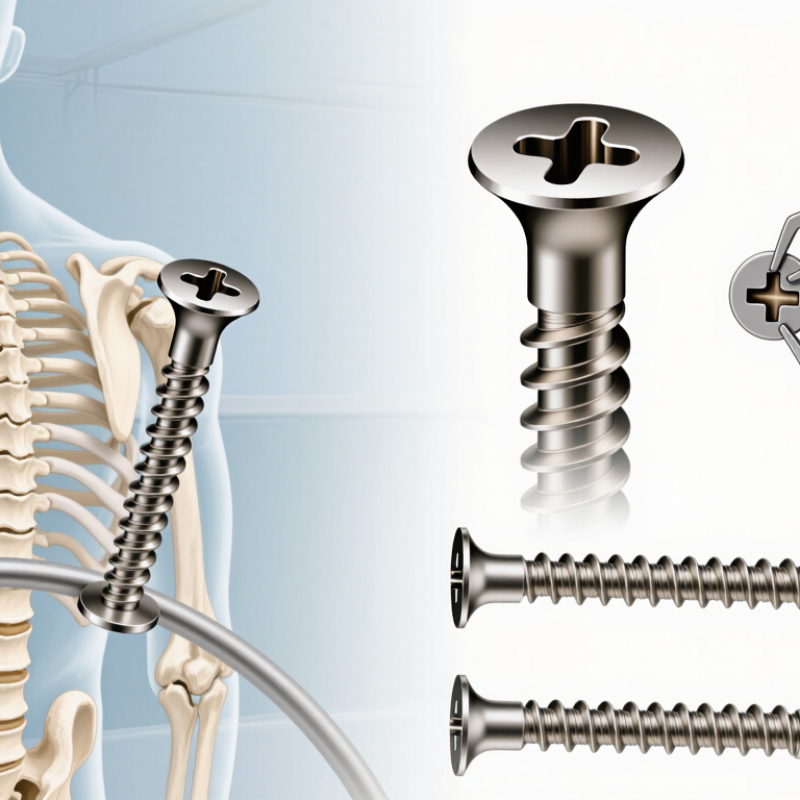
A polyaxial pedicle screw has a head that pivots around its shaft, helping the surgeon connect a rod when screw angles differ. This flexibility can simplify rod placement in complex spinal constructs. It does not make every trajectory safe or suitable. Screw dimensions and placement must match the patient’s anatomy, bone quality, and surgical plan. Preoperative imaging helps assess the pedicles, while intraoperative checks support accurate placement. Fit matters.

The clinical goal guides selection. A surgeon may consider screw diameter and length, head movement, material properties, and compatibility with the planned rod and construct. In weaker bone, fixation strategy deserves particular attention; a movable head alone cannot compensate for poor purchase. More flexibility is not always better. The best choice depends on the specific spinal level and procedure, and evidence or device features should be assessed without assuming newer means superior.

Tips: Confirm dimensions against imaging and the surgical plan. Check that the head’s range of motion supports the intended rod path. Review relevant clinical evidence and follow the device’s instructions. Ask how bone quality may affect fixation. Small details matter, though no checklist replaces surgical judgment. Even careful planning has limits, so individual anatomy and intraoperative findings may require adjustments.

How to Choose Polyaxial Pedicle Screws in 2026? — Understanding Polyaxial Pedicle Screws and Their Clinical Role
Selection Consideration What to Assess Clinical Relevance Practical Guidance
Polyaxial head function The screw head can angulate relative to the screw shaft before final locking. Head mobility can make rod placement and alignment easier when screw heads are not perfectly in line. Confirm the intended range of head movement and locking method in the device instructions. Polyaxial mobility does not, by itself, establish greater construct strength.
Patient anatomy and screw dimensions Pedicle width, vertebral level, planned trajectory, and available screw diameters and lengths. Appropriate sizing and trajectory help achieve planned fixation while limiting the risk of cortical breach or injury to nearby structures. Use preoperative imaging and intraoperative assessment as appropriate. Select dimensions for the individual anatomy rather than relying on a universal size.
Bone quality Bone density, osteoporosis, and other factors that may affect purchase. Reduced bone quality can compromise screw fixation and increase the risk of loosening or pullout. Consider the overall fixation plan and patient-specific risk factors. Use augmentation only when clinically appropriate and with a system specifically indicated for that use.
Rod and connector compatibility Rod diameter, screw-head interface, locking components, and any required connectors. Components must be compatible to assemble and lock the intended construct correctly. Verify compatibility across all system components before surgery; do not assume that parts from different systems are interchangeable.
Reduction and alignment needs Planned spinal levels, deformity correction, and the amount of rod-to-screw alignment required. Head articulation may help accommodate alignment differences during rod placement, but it does not replace appropriate surgical planning or technique. Choose a configuration that supports the planned procedure and follow the system-specific steps for rod seating and final tightening.
Material and imaging considerations Implant material, imaging artifact, and any MRI conditions stated in the product labeling. Implant material and geometry can affect imaging appearance; MRI safety conditions are device-specific. Consult the implant documentation for material details and MRI conditions. Do not infer MRI safety from the material name alone.
Evidence and intended use Regulatory authorization, indications, contraindications, and available clinical evidence for the intended application. Appropriate use depends on the device’s authorized purpose and the clinical circumstances, not solely on its design features. Review current labeling and relevant evidence, and apply professional judgment to the individual patient.
Operative workflow and training Required instruments, insertion technique, head manipulation, and locking sequence. Correct handling and final locking are essential to assembling the intended construct. Ensure the surgical team is familiar with the system-specific instruments and instructions for use before the procedure.

Assessing Patient Anatomy, Diagnosis, and Surgical Requirements

Choosing a polyaxial pedicle screw begins with the patient, not the implant. Review imaging for pedicle width, shape, and planned screw trajectory at each spinal level. A narrow pedicle may leave little room for error. Bone quality matters too, especially when osteoporosis or prior surgery could affect fixation. CT can help clarify bony anatomy when standard images do not show enough detail.

The diagnosis and surgical plan shape the required construct. A short fusion for degenerative disease may have different demands from a longer construct for deformity or revision surgery. Consider the intended alignment, available fixation points, and how the screw heads must connect to the rod. Polyaxial movement can help with rod placement, but it does not make a poor trajectory safe. Check that the planned angle remains appropriate for the patient’s anatomy. Small differences matter.

A plan can still be wrong. Reassess it against the patient’s symptoms, imaging, bone quality, and operative goals, and adapt it to the findings during surgery. The treating surgeon should make the final choice using current clinical evidence and their training.

Comparing Screw Design, Materials, and Compatibility

How to Choose Polyaxial Pedicle Screws in 2026?

Comparing Screw Design, Materials, and Compatibility

Polyaxial pedicle screws allow the screw head to angle around the shaft, helping connect rods when anatomy or alignment varies. Compare head movement, tulip height, thread profile, and available screw diameters against the patient’s anatomy and the surgical plan. More angulation is not automatically better; it can affect rod seating and construct geometry. Fit matters. Titanium alloys are common because they combine strength with relatively low weight and imaging considerations. Review the device specifications and imaging needs with the clinical team rather than assuming all materials behave alike.

Compatibility is just as important as design. Confirm the exact rod diameter, locking-cap interface, driver, and instrumentation specified for the screw system. Similar-looking components may not be interchangeable. Check the manufacturer’s current instructions and technical documentation, including any limits on rod contouring or head engagement. Small mismatches can complicate assembly. Selection should be made by qualified clinicians using patient-specific imaging, relevant training, and the applicable device instructions.

Tips: Before choosing, compare the screw’s dimensions and head-angle range with the planned rod path. Verify every connected component and instrument. Do not guess. If a specification is unclear, pause and confirm it with the device documentation or a qualified representative; compatibility deserves a second look.

Evaluating Evidence, Safety, and Regulatory Status in 2026

How to Choose Polyaxial Pedicle Screws in 2026?

In 2026, evaluate the evidence for the exact screw system and intended use, not just the polyaxial design. A movable screw head can help with rod alignment, but it does not prove better patient outcomes. Look for peer-reviewed studies reporting follow-up duration, revision rates, screw loosening, malposition, and neurological complications. Check whether the results apply to similar patients and surgical techniques. Evidence is uneven. Small studies and short follow-up can leave important questions open.

Regulatory status needs the same close reading. In the United States, confirm the device’s FDA listing and clearance in the 510(k) database, then compare its labeled indications with the planned procedure. FDA 510(k) clearance is based on substantial equivalence; it is not proof of superior clinical performance. FDA’s MDUFA V commitment goals set a 90-day review goal for 90% of 510(k) submissions. That is a review target, not a safety score.

Not enough. Also review available safety notices and adverse-event reports, while remembering that passive reporting has no reliable denominator. Record the model, indication, evidence quality, and unresolved risks before choosing. A tidy evidence table helps, but it cannot replace clinical judgment.

Matching Screw Features to the Surgical Plan and Patient Needs

Choosing a polyaxial pedicle screw starts with the surgical plan, not a feature checklist. Its swiveling head can help align a rod across levels with different screw trajectories. That can ease connection. It cannot correct poor placement or unsuitable sizing. The intended fusion levels, spinal anatomy, and planned correction should guide the choice.

Preoperative imaging helps the surgical team assess each pedicle’s width, length, and direction. Screw diameter and length must suit that anatomy while supporting the fixation plan. Bone quality matters, too. In weaker bone, the surgeon may consider the overall construct and other fixation strategies rather than relying on a screw feature alone. Small differences matter here.

The head’s range of motion should match the expected rod path and available working space. A broad range may help in some cases, but more movement is not automatically better. Compatibility with the planned rod and instruments also deserves attention. During surgery, actual anatomy may differ from the images. Plans sometimes need revision. The best choice is one the surgeon can place safely and connect reliably, with decisions tailored to the patient and the procedure.

FAQS

What does a polyaxial pedicle screw do?

Its head pivots around the shaft, helping connect a rod across different screw angles. It cannot correct poor placement.

Which design details should clinicians compare?

Compare head movement, tulip height, thread profile, and screw diameter with the patient’s anatomy and planned rod path. More movement is not always better.

How should screw size be selected?

Preoperative imaging helps assess each pedicle’s width, length, and direction. The surgeon should match screw dimensions to the anatomy and fixation plan. Small differences matter.

Does titanium alloy make every screw system suitable?

Titanium alloys are common for their strength, low weight, and imaging considerations. Materials can behave differently, so review device specifications and imaging needs with the clinical team.

How can teams check component compatibility?

Confirm the exact rod diameter, locking-cap interface, driver, and instruments listed for the system. Similar-looking parts may not fit. Do not guess.

What evidence should be reviewed?

Look for studies on the exact system and intended use. Check follow-up time, revision rates, loosening, malposition, and neurological complications. Evidence may remain incomplete.

Does regulatory clearance prove better patient outcomes?

No. In the United States, check the device’s clearance and labeled indications. Clearance does not establish superior clinical performance.

What should clinicians consider when bone quality is weak?

Bone quality affects the overall fixation plan. The surgeon may consider other construct strategies rather than relying on one screw feature. That deserves a second look.

Conclusion

Choosing Polyaxial Pedicle Screws in 2026 requires a structured evaluation of clinical needs, patient anatomy, and surgical objectives. These screws allow controlled angular movement between the screw head and rod, which can support alignment, correction, and easier construct assembly in selected spinal procedures. The choice should begin with the patient’s diagnosis, bone quality, spinal levels, deformity pattern, and the intended fixation strategy.

Surgeons should then compare screw geometry, thread design, materials, head mobility, rod compatibility, and instrumentation requirements. Evidence regarding mechanical performance, clinical outcomes, adverse events, and sterilization should be reviewed alongside the product’s current regulatory status in the intended market. Ultimately, the most appropriate option is the one that matches the surgical plan while providing reliable fixation, compatibility with the overall system, and a suitable safety profile for the individual patient. Careful planning and adherence to approved instructions remain essential throughout the decision-making process.

Liam

Liam

Liam is a skilled marketing professional with a deep expertise in our company's innovative product offerings. His passion for the industry drives him to stay ahead of market trends and continuously explore new strategies to amplify our brand's presence. With a keen eye for detail and a commitment......